7-Day Uzbekistan Itinerary: Silk Road Highlights
A tight one-week Uzbekistan itinerary covering Tashkent, Samarkand and Bukhara by high-speed train, with 2026 fares, budgets and what to skip.

Seven days is what most people can actually get away from work, and it is enough for a proper first Silk Road trip. It is long enough to see the three cities that made Uzbekistan famous (Tashkent, Samarkand and Bukhara) without the day-trip padding and desert detours that stretch a longer route. The high-speed Afrosiyob train does the heavy lifting, linking all three in comfortable two- and three-hour hops, so you spend your time inside blue-tiled courtyards rather than on the road.
This is the plan we recommend for travellers who want the classic highlights, move at a steady pace, and would rather do three cities well than five badly. If you have more time, our 10-day Uzbekistan itinerary adds Khiva and the desert road; we explain exactly what changes between the two versions further down.
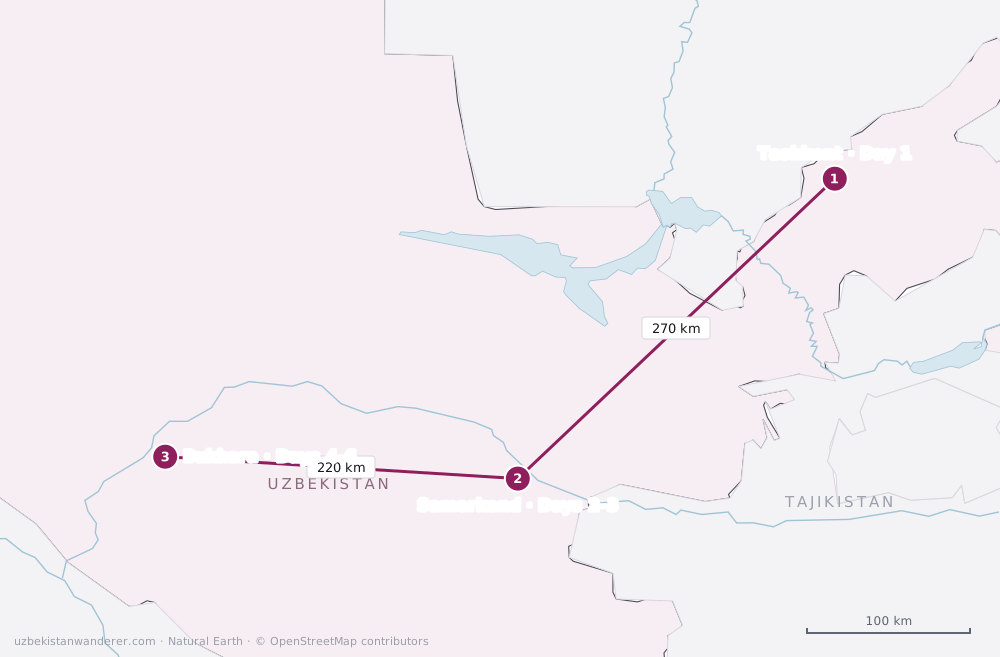
Itinerary at a glance
| Day | Base | Focus | Getting there |
|---|---|---|---|
| 1 | Tashkent | Arrive, metro, bazaar, old town | Fly in |
| 2 | Tashkent to Samarkand | Registan by afternoon light | Afrosiyob ~2h10–2h30 |
| 3 | Samarkand | Shah-i-Zinda, Gur-e-Amir, Bibi-Khanym | On foot / taxi |
| 4 | Samarkand to Bukhara | Afternoon in the old town | Afrosiyob ~1h40–2h |
| 5 | Bukhara | Poi Kalon, the Ark, trading domes | On foot |
| 6 | Bukhara | Slow morning, day trip or crafts | On foot / taxi |
| 7 | Bukhara to home | Train back or fly out | Afrosiyob or flight |
Day 1: Land in Tashkent and shake off the flight
Most international flights land in Tashkent in the small hours, so treat day one as a soft start. The capital is green, Soviet-modern and low on tourist crowds, a useful buffer before the intensity of Samarkand. Don’t over-plan it.
What to actually see
- Chorsu Bazaar under its turquoise dome, best mid-morning when the bread and spice stalls are busy.
- The Hazrati Imam complex, and next door the Center of Islamic Civilization, where the 7th-century Uthman Quran has been on display since the Center opened in March 2026 (it was moved there in November 2025; ticketed, timed visits with an audio guide).
- At least one ride on the Tashkent metro, the mosaic-and-chandelier stations are a sight in themselves and photography is now allowed.
Book the onward train tonight
If you haven’t already reserved seats, sort your Samarkand and Bukhara tickets now. Afrosiyob seats are released about 60 days ahead and popular departures sell out, so ideally you booked before arriving. Our full Tashkent travel guide covers where to stay near the station and how to get in from the airport.
Day 2: Morning train to Samarkand, evening at the Registan
Take a mid-morning Afrosiyob from Tashkent to Samarkand. The high-speed service covers the distance in about 2 hours 10 minutes to 2 hours 30 minutes, depending on the departure, and economy class is 311,000 som (about US$26) since the February 2026 rise. Fares are fixed, so booking early secures a seat rather than a lower price (last checked: September 2026). The first daily train leaves at 06:33 (06:10 on Fridays to Sundays) and departures continue until the evening, so you can be checked into a Samarkand guesthouse by lunch.
Save the Registan for golden hour
The three madrasahs of the Registan are the image everyone carries home, and they are at their best in late-afternoon light when the tilework turns from turquoise to gold. Arrive an hour before sunset, then stay into the evening: from roughly April to October a seated sound-and-light show runs on many evenings (150,000 som for a seat, or watch free from outside the seating). Recent reports say the ticket is single-entry with no same-day re-entry, so plan the evening view from the free steps outside the square.
Day 3: A full day in Samarkand
This is the heart of the trip. Samarkand rewards a slow, single day on foot and by short taxi hops, and the major sites sit close enough to string together comfortably.
The essential circuit
- Shah-i-Zinda, a narrow avenue of tombs and some of the finest tilework in Central Asia. Go early to beat both heat and coach groups.
- Bibi-Khanym Mosque, vast, half-ruined, and right beside the Siyob Bazaar for a mid-morning break.
- Gur-e-Amir: Timur’s fluted-dome mausoleum, quietest and most atmospheric in the last hour before closing.
If you have energy left, the Ulugh Beg Observatory on the edge of town is a short taxi ride and a nice change of register from mosques and madrasahs. For a deeper breakdown of routes, timings and where to eat, see our Samarkand travel guide.
Day 4: Short hop to Bukhara
The Samarkand to Bukhara leg is the easiest of the trip. The Afrosiyob covers it in about 1 hour 40 minutes to 2 hours, with economy fares of roughly 165,000–200,000 som (about US$14–17; check the exact fare when you book), arriving at Bukhara-1 station in Kagan, about 12 km from the old town (last checked: September 2026). Take an early-afternoon departure and you’ll be walking Bukhara’s old town by late afternoon.
Ease into the old town
Bukhara feels different from Samarkand, smaller, more intimate, and lived-in, with much of the medieval core intact rather than restored to a shine. Spend the first evening simply wandering, then settle at the Lyabi-Hauz pond as the surrounding teahouses fill up. It is the single best place in the country to do nothing at all.
Day 5: Bukhara’s monumental core
Almost everything worth seeing in Bukhara is within a compact, walkable centre, which makes a full day here relaxed rather than rushed.
The highlights
- Poi Kalon, the great mosque, the towering Kalon minaret that even Genghis Khan reportedly spared, and the Mir-i-Arab Madrasah facing it.
- The Ark, the vast royal fortress at the edge of the old town, worth it as much for the views from the walls as the museums inside.
- The trading domes, three restored bazaars where you can still buy scissors, carpets and karakul hats, plus the nearby four-minaret gatehouse of Chor Minor.
Our Bukhara travel guide lays out a walking loop that ties these together without backtracking.
Day 6: A slower Bukhara day
By day six you’ll be glad of a gentler pace. Use the morning for the sights you skipped, the Bolo Hauz Mosque with its painted wooden columns, or the summer palace of Sitorai Mokhi-Khosa a short taxi ride out of town.
Crafts, cooking or just coffee
Bukhara is Uzbekistan’s craft capital. Miniature painting, metal-chasing and suzani embroidery workshops all welcome drop-ins, and several run short hands-on sessions if you book a day ahead. Otherwise this is the day to slow right down, eat a long lunch of plov, and let the trip settle before you head home.
Day 7: Travel home
How you leave depends on your flight. Bukhara has a small airport with domestic connections back to Tashkent, which saves the overland leg if your international flight is the same evening. Otherwise, the direct Afrosiyob back to Tashkent takes roughly three and a half to four hours and costs 509,000 som in economy (last checked: September 2026), comfortable, scenic, and a good final look at the countryside. Book the return the moment your dates are fixed; it is the leg most likely to sell out.
How this differs from our 10-day route
The biggest single difference is Khiva. Our 10-day itinerary continues west from Bukhara across the Kyzylkum desert to the walled city of Khiva, which is arguably the most complete and photogenic old town in the country. On seven days, Khiva simply doesn’t fit without gutting your time in Samarkand and Bukhara, the connection is a long train (the fast train 752 leaves Bukhara at 10:54 and reaches Khiva at 14:31, but only on Tuesdays, Thursdays and Saturdays; end to end from Tashkent it is about seven and a half hours), and it forces a rushed backtrack.
What the one-week plan drops
- Khiva and the desert crossing, the marquee addition on the longer trip.
- Day trips from each base, such as Shakhrisabz (Timur’s birthplace) from Samarkand.
- Buffer days, the 10-day route builds in slack for slow mornings and unplanned finds; the week does not.
What you keep is the essential Silk Road triangle at a pace that still feels like a holiday. If you can find even two extra days, we would spend them adding Khiva rather than lingering longer in the three cities you already have. Either way, the train, shared-taxi and domestic-flight options that make both routes work are laid out in the page on moving between cities.
Budget snapshot
Uzbekistan is inexpensive by European or North American standards. As a rough per-person guide for seven days, excluding international flights (last checked: July 2026):
- Budget: around $40 to $55 a day, guesthouse dorms and simple doubles, plov and street food, economy trains.
- Mid-range: around $70 to $110 a day, boutique guesthouses in restored merchant houses, sit-down restaurants, the occasional private driver.
- Trains: about 985,000–1,020,000 som (roughly US$83–86) for the three Afrosiyob legs in economy, as set out below.
| Leg | Train | Time | Economy fare |
|---|---|---|---|
| Tashkent → Samarkand | Afrosiyob (first departure 06:33 daily, 06:10 Fri–Sun) | 2h10–2h30 | 311,000 som |
| Samarkand → Bukhara | Afrosiyob | 1h40–2h | ~165,000–200,000 som (check when booking) |
| Bukhara → Tashkent | Afrosiyob | ~4h | 509,000 som |
Fares are from Seat61 after the February 2026 rise (last checked: September 2026); the Samarkand–Bukhara leg isn’t on its list, so confirm it on the booking site.
Accommodation, food and transport prices are itemised in our travel-costs breakdown.
Frequently asked questions
Is seven days enough for Uzbekistan?
Yes, for the three headline Silk Road cities. Seven days lets you give Tashkent a day, Samarkand two, and Bukhara two-and-a-bit, all linked by fast train. It is not enough to add Khiva or the desert without cutting into that core, which is exactly why the longer trip exists.
Should I book the Afrosiyob trains in advance?
Absolutely. Seats go on sale about 60 days before departure and the best times sell out, especially in spring and autumn. Book directly through Uzbekistan Railways at eticket.uzrailpass.uz or the official Uzbekistan Railways app; third-party sites such as 12Go work too for a small fee if the official site gives you trouble.
Can I do the route in reverse, ending in Tashkent?
Yes. Flying into Tashkent and working west to Bukhara is the most common direction, but if your flights suit it you can start in Bukhara or Samarkand (both have airports) and finish in Tashkent. The train timetable works equally well either way; check current departures on railway.uz.
When is the best time to make this trip?
Spring (April to early June) and autumn (September to October) are ideal, warm days, cool evenings and clear light on the tilework. Summer is fiercely hot, and winter is cold but quiet and cheap. For a month-by-month view, see the best time to visit Uzbekistan.
Is Uzbekistan easy to travel independently?
Very. Registration is handled automatically by hotels, the trains are modern and punctual, English is spoken at tourist sites, and most nationalities now enter visa-free or with a quick e-visa. This one-week route in particular needs no guide or tour, just your train tickets and a couple of pre-booked guesthouses.
What if I only have five days?
Drop Tashkent to a single arrival evening and cut one Bukhara day. You can still see Samarkand and Bukhara properly on a train-focused five-day trip, though you lose the slower moments that make a week feel like a holiday rather than a dash.
Seven days is a genuinely satisfying introduction to the Silk Road: three great cities, three easy train rides, and none of the fatigue that comes from trying to see everything. Get the Afrosiyob seats booked, keep the pace honest, and save Khiva for the return trip you’ll almost certainly want to make.