Tashkent Travel Guide: What to Do in Uzbekistan’s Capital
Plan your Tashkent trip: Chorsu Bazaar, Khast Imam, metro art, Besh Qozon plov, Magic City, Chimgan day trips, plus current prices and transport tips.

Tashkent is home to about 3 million people and almost every international flight into Uzbekistan, yet plenty of itineraries give it one night before the morning train to Samarkand. That’s a missed opportunity. The capital lacks the tiled madrasas of the Silk Road cities, but it has something they don’t: a working city where you can watch bakers slap non bread into tandyr ovens at Chorsu in the morning and ride through the mosaic-lined metro stations of 1977 in the afternoon.
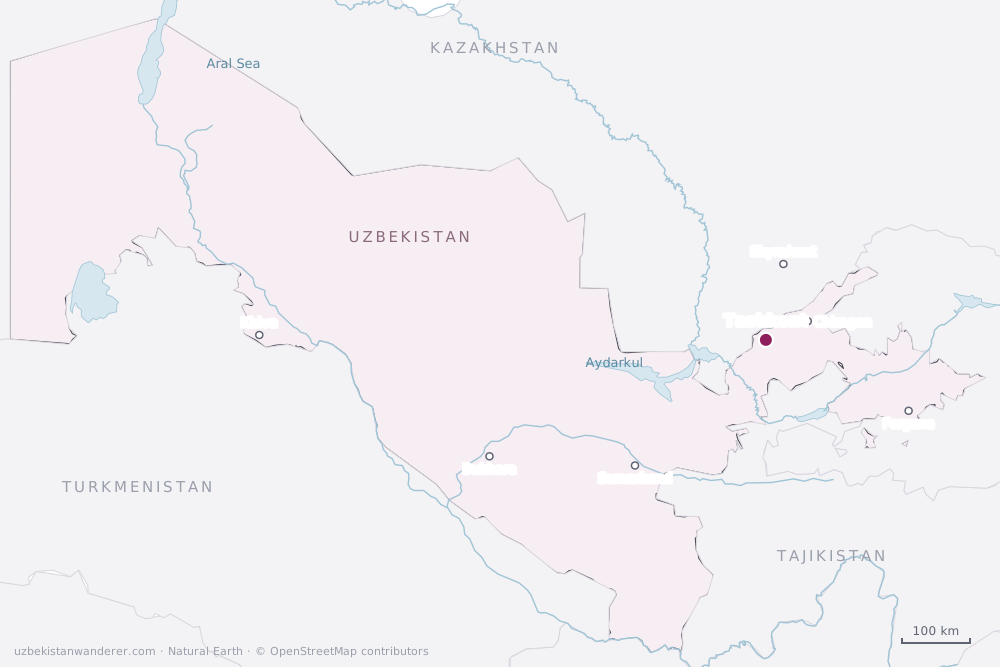
Tashkent is also the most comfortable city in the country to travel in. Yandex Go taxis cost a few dollars, the metro costs pennies, and the food scene runs from the giant cauldrons at Besh Qozon to Korean-Uzbek cafes. When you need a break from the city, the Chimgan mountains and the turquoise Charvak reservoir sit only 80–90 kilometres away.
This guide covers the headline sights, the metro stations worth getting off at just to look around, where to eat plov, how many days to budget, and the practical details, airport transfers, fares and money, that make the difference between a smooth visit and a frustrating one.
Chorsu Bazaar: Start Here
A market has stood at Chorsu since at least the medieval period, and it’s the city’s most atmospheric sight. The centrepiece is the huge turquoise-domed hall where butchers and spice merchants work in tiered rings, climb to the upper gallery for the classic photo over the stalls. Around the dome sprawls the rest of the bazaar: pyramids of melons and pomegranates, dried fruit and nuts sold by the scoop, ceramics, and the tandyr section where you can buy a warm non straight from the oven wall for a few thousand som.
Go in the morning when it’s busiest and coolest, haggle gently, and don’t skip the plov and shashlik canteens on the market’s edges, some of the cheapest good meals in the city. Chorsu has its own metro station on the blue Ozbekiston line, making it an easy first stop. For what you’ll be eating here, see our Uzbek food guide.
Khast Imam Complex and the Uthman Quran
About a 20-25 minute walk (or five-minute taxi) north of Chorsu, the Khast Imam complex is Tashkent’s religious heart and its most photogenic ensemble: the Hazrati Imam Friday Mosque with its twin minarets, the 16th-century Barak Khan Madrasa, and the small Muyi Muborak Madrasa. Entry to the square and mosque is free; dress modestly, and women should carry a headscarf for the prayer halls.
For decades the complex’s great treasure was the Uthman Quran, a 7th–8th-century manuscript held to be one of the oldest Qurans in existence. On 13 November 2025 the manuscript moved from the Muyi Muborak Madrasa to the new Center of Islamic Civilization next door, which opened in March 2026 and shows it on ticketed, timed visits with an audio guide (last checked: September 2026). The Khast Imam square itself remains fully open and is at its best in late-afternoon light.
The Tashkent Metro: An Underground Art Gallery
The Tashkent metro, opened in 1977, was Central Asia’s first, and the Soviets treated its stations as showpieces. Photography was banned until 2018 because the system doubled as a nuclear shelter; today you can shoot freely, and the stations are an attraction in their own right.
From 1 October 2026 a ride costs 2,500 som with a contactless bank card, ATTO transit card or the ATTO app (up from 1,700; a second ride within the hour is 1,500), or 3,000 som for a paper QR ticket bought with cash, either way about US$0.21–0.25 (last checked: September 2026). The cash fare is deliberately higher to push riders toward electronic payment, so if you have a contactless Visa or Mastercard, just tap it at the turnstile. The new fares were reported by Gazeta.uz, and our metro guide has a station-hopping route. These stations are the ones worth getting off for:
- Kosmonavtlar, the famous one: a deep-blue tribute to Soviet cosmonauts, with ceramic medallions of Yuri Gagarin and Valentina Tereshkova.
- Alisher Navoiy, turquoise domes and ceramic panels honouring Uzbekistan’s national poet; the most “Silk Road” of the stations.
- Pakhtakor, glittering cotton-motif mosaics (pakhta means cotton).
- Mustaqillik Maydoni, marble columns and chandeliers beneath Independence Square.
- Toshkent, ornate plasterwork and scenes of the city’s history.
Budget an hour or two to hop between them; as long as you don’t exit through the turnstiles, it’s all one fare.
Amir Timur Square and the City Centre
Modern Tashkent radiates from Amir Timur Square, where a bronze equestrian statue of Timur (Tamerlane) presides over gardens ringed by the Tashkent Chimes clock towers, the Soviet-modernist Hotel Uzbekistan, an icon whether you love it or hate it, and the blue-domed Amir Timur Museum. From here, leafy Sailgokh Street (“Broadway”) runs toward Independence Square (Mustaqillik Maydoni), past artists selling paintings and souvenir stalls. Between the two squares stands the palace of an exiled Romanov grand duke, and a short walk away is the Navoi Opera and Ballet Theatre, built partly by Japanese prisoners of war.
This area is the best place to feel Tashkent’s layered identity: Tsarist-era buildings, Soviet monumentalism, and glassy new towers all within a fifteen-minute walk. It’s also where many of the city’s best hotels cluster.
Museums Worth Your Time
State Museum of Applied Arts
Our favourite museum in the city, set in a former ambassador’s residence that is itself a masterpiece of carved ganch plaster and painted ceilings. The collection, suzani embroidery, Rishtan ceramics, jewellery, carpets, is a perfect primer before you head to the craft workshops of Bukhara. Entry is inexpensive, with a small extra charge for photography; check the day’s hours locally.
State Museum of History of Uzbekistan
Home to fragments and a copy of the 1st-century Airtam frieze (the original has been in the Hermitage in St Petersburg since the 1930s) and a strong archaeology collection covering the region from the Bronze Age through the Timurids. It reopened on 24 July 2026 after renovation; sources disagree on its closing day (its own site lists Monday to Saturday), so check before a Sunday or Monday visit. Foreigners pay about 100,000 som (last checked: September 2026). Our State Museum of History guide has the details.
Amir Timur Museum and the Railway Museum
The Amir Timur Museum on the square is worth 45 minutes for its grand dome interior and Timurid exhibits. Families should also consider the open-air Railway Museum near the main station, a yard of hulking Soviet locomotives you can climb around.
Magic City and Tashkent City Park
Magic City is Tashkent’s answer to a Disney-style theme park: a pastel village of castle towers and streets styled after Paris, London and Barcelona, with cafes, rides and an oceanarium with a 20-metre shark tunnel. Visitor reports say entry to the park itself is free and you pay only for individual attractions, but check before you go. Come after dark, when the lights and musical fountain shows are at full strength; it’s kitsch, but it’s where Tashkent families actually spend their evenings, and the people-watching is half the fun. The adjacent Tashkent City Park has its own dancing-fountain show on summer nights.
Eat Plov at Besh Qozon (the Central Asian Plov Centre)
Plov is Uzbekistan’s national dish, and Besh Qozon, the Central Asian Plov Centre near the TV Tower, is where Tashkent makes it at scale. Every morning, cooks prepare rice, yellow carrots, mutton and whole heads of garlic in enormous kazan cauldrons, each feeding hundreds. Arrive between 11:00 and 12:30: that’s when the plov is freshest, the queues are still manageable, and you can watch the cauldrons being worked. By mid-afternoon the day’s plov is often gone, even though the venue stays open into the evening.
Order at the counter, choosing extras like quail eggs, garlic or kazy (horse sausage), and expect to pay a few US dollars for a plate big enough to end your afternoon plans. It’s tourist-famous now but still full of locals. Combine it with the neighbouring TV Tower observation deck for a good half-day.
Day Trips: Chimgan Mountains and Charvak Lake
Tashkent’s best surprise is how close the Tian Shan foothills are. The Chimgan mountains lie about 80–90 km northeast of the city in Ugam-Chatkal National Park, roughly 1.5 to 2 hours by car, wrapped around the vivid turquoise Charvak reservoir. In summer, locals swim, ride horses and picnic on Charvak’s beaches; in winter (roughly December–March), the Amirsoy resort becomes the country’s best-known ski area.
The classic day trip combines all three: ride the Amirsoy gondola up toward the Kumbel ridge for views of Big Chimgan, lunch at altitude, then loop back past Charvak for a swim or a lakeside shashlik. Hire a driver for the day (agree a round-trip price) or join one of the many organised day tours from Tashkent. If you have one spare day and the weather is good, this is how to spend it. For route planning, Caravanistan’s Uzbekistan pages are a reliable independent resource.
How Many Days Do You Need in Tashkent?
Two full days covers the city comfortably: day one for Chorsu, Khast Imam and an evening at Magic City; day two for the metro stations, Amir Timur Square, a museum and Besh Qozon. Add a third day for Chimgan and Charvak. Tight on time? One well-planned day hits Chorsu, Khast Imam, a few metro stations and a plov lunch. Our 10-day Uzbekistan itinerary shows how Tashkent fits alongside Samarkand, Bukhara and Khiva.
Getting There and Getting Around
From the airport
Tashkent International Airport (TAS) sits about 20–30 minutes from the centre. Ignore the taxi touts in arrivals, they’ll quote US$10–20 for a ride that costs a fraction of that. Use the Yandex Go app instead (download it before you land; it works in English and shows the fare upfront): a ride to the centre typically runs 30,000–60,000 som, roughly US$2.50–5 (last checked: July 2026). Walk to the marked pickup area and match the plate number in the app.
Around the city
The metro plus Yandex Go covers essentially every journey a visitor makes. Buses exist and use the same tap-to-pay system, but with taxis this cheap most travellers never need them. High-speed Afrosiyob trains to Samarkand and Bukhara leave from Tashkent’s main railway station. Book a few days ahead in high season. Our country-wide transport overview compares trains, shared taxis and flights for each onward leg.
Typical Tashkent costs
| Item | Price (som) | Approx. USD |
|---|---|---|
| Metro ride (contactless card / ATTO, from 1 Oct 2026) | 2,500 | $0.21 |
| Metro ride (cash QR ticket) | 3,000 | $0.25 |
| Airport to centre (Yandex Go) | 30,000–60,000 | $2.50–5 |
| Plate of plov at Besh Qozon | 40,000–60,000 | $3–5 |
| Magic City entry | Reported free (rides extra) | n/a |
| Museum entry (typical) | 25,000–60,000 | $2–5 |
Metro fares last checked September 2026, other prices July 2026; the som moves against the dollar, so treat the USD column as a guide.
Practical Tips
- Cash and cards: Cards are widely accepted in Tashkent, but carry som for bazaars, canteens and metro cash tickets.
- SIM cards: Buy a local SIM (Ucell, Beeline, Mobiuz) at the airport, you’ll want data for Yandex Go and translation apps.
- Seasons: April–June and September–October are ideal. July and August regularly top 38°C, sightsee early, rest at midday. Winters are cold but great for Amirsoy skiing.
- Dress: Tashkent is relaxed by regional standards, but cover shoulders and knees at Khast Imam and other religious sites.
- Safety: Street crime is rare; normal precautions suffice. Police occasionally check documents, so carry your passport or a photo of it plus your hotel registration slip.
Frequently Asked Questions
Is Tashkent worth visiting, or should I go straight to Samarkand?
It’s worth at least one full day and ideally two. Tashkent won’t match Samarkand’s Registan for monuments, but Chorsu Bazaar, Khast Imam and the metro stations are genuinely memorable, and the food and logistics are the best in the country. Since almost every international itinerary starts or ends here anyway, building in a day or two costs you very little.
How much does the Tashkent metro cost?
From 1 October 2026 a single ride costs 2,500 som (about US$0.21) with a contactless bank card or ATTO card, up from 1,700, or 3,000 som for a cash-bought paper QR ticket (last checked: September 2026). There are no zones; one tap covers any journey. Trains run from about 05:00 until midnight.
Can I photograph the metro stations?
Yes. The ban was lifted in 2018 and casual photography is now normal. Be sensible about photographing staff or security personnel, avoid blocking platforms at rush hour, and skip tripods.
Where can I see the Uthman Quran now?
At the Center of Islamic Civilization beside Khast Imam. The manuscript moved there from the Muyi Muborak Madrasa on 13 November 2025, and since the Centre opened in March 2026 it has been shown on ticketed, timed visits with an audio guide (last checked: September 2026). Khast Imam itself remains free and open.
Do I need a visa to visit Tashkent?
Citizens of about 90 countries, including the UK, EU states, Canada and Australia, enter Uzbekistan visa-free, most for up to 30 days, and US citizens have had 30 days visa-free since 1 January 2026; others can use the straightforward e-visa. Rules change, so check official channels before you fly; our Uzbekistan visa guide breaks down requirements by nationality.
Is one day enough for the Chimgan and Charvak trip?
Yes, it’s designed as a day trip. Leave Tashkent by 8:00–9:00, ride the Amirsoy cable car, lunch in the mountains, stop at Charvak on the way back and you’ll return by early evening. Overnighting at a lakeside resort is a pleasant summer upgrade but not necessary to see the highlights.
Tashkent rewards travellers who give it a chance: come for the logistics, stay for the bazaar mornings, the cosmonaut mosaics and the plov cauldrons at Besh Qozon. Then the Silk Road proper awaits; a good starting list is the best things to do in Uzbekistan.