Samarkand to Bukhara: Transport Guide
How to travel from Samarkand to Bukhara: Afrosiyob train times and fares, slower trains, shared taxis, and getting from Bukhara-1 station into town.

Bukhara’s railway station is not in Bukhara. It sits in the town of Kagan, about 12 kilometres from the old city, and every year a fair number of travellers step off a beautifully punctual high-speed train and realise their hotel is still half an hour away. Nothing has gone wrong. This is simply how the route works, and knowing it in advance turns the only awkward part of the journey into a five-minute formality.
Otherwise this is the easiest intercity hop in the country. Around 270 kilometres of flat, dry country separate the two cities, and the fast train covers it in about an hour and forty minutes to two hours for the price of a decent lunch back home. There is no reason to fly, no reason to hire a car, and, for most people, no reason to take a taxi either.
What follows is the practical detail: which trains run, what they cost, how to get a ticket that actually exists when you turn up, and what to do about that station in Kagan. If you have already made the first leg of the classic route, our Tashkent–Samarkand route guide covers the same ground for the trip in.
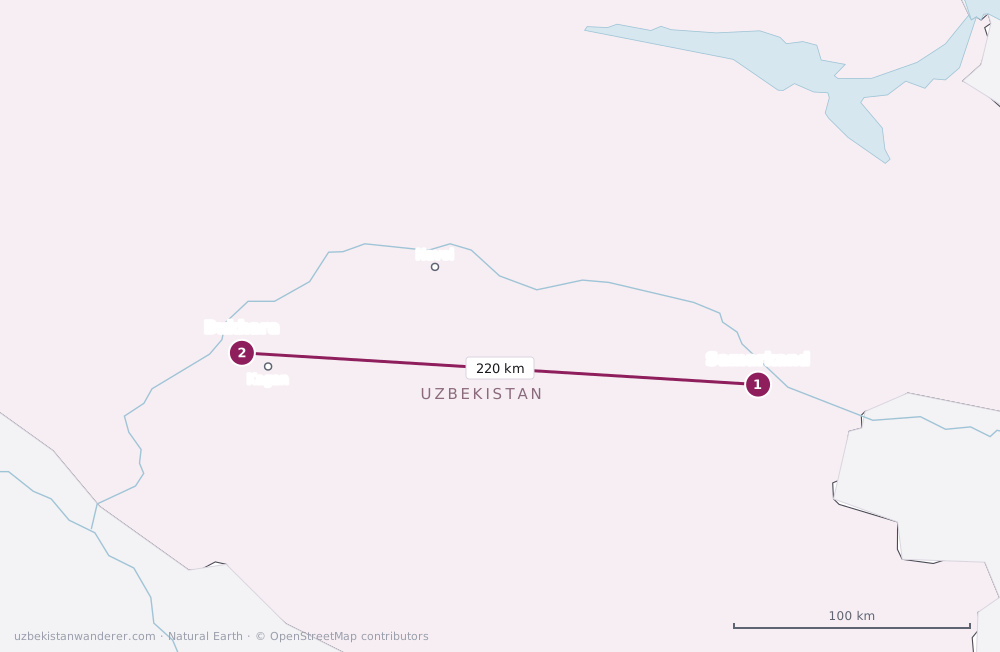
The Afrosiyob: the obvious choice
Uzbekistan’s Talgo-built Afrosiyob trains are the backbone of Silk Road travel, and the Samarkand–Bukhara leg is the shortest ride they make on the main line. Expect a clean, air-conditioned carriage, reclining seats, USB sockets, a trolley service with tea and snacks, and departure within a minute of the advertised time. Uzbek Railways takes punctuality seriously in a way that will surprise anyone arriving from elsewhere in the region.
Three classes are sold. Economy is a 2+2 layout and is genuinely fine for ninety minutes, most travellers book it and never think about the alternatives. Business gives you 2+1 seating and more legroom. VIP is a small end car with the widest seats, laid out 2+1, and, usually, a light meal included. On a journey this short the upgrade buys comfort rather than survival, and the money is better spent in Bukhara.
Times and fares
Westbound fast trains from Samarkand are bunched in the morning, with one late-evening service that reaches Bukhara just after midnight. There is no afternoon Afrosiyob on this leg in the June 2026 timetable. Timings shift with the seasonal timetable, so treat the figures below as the shape of the day rather than gospel, and confirm your own date when you book.
| Option | Journey time | Typical fare (economy) | Notes |
|---|---|---|---|
| Afrosiyob high-speed | 1 hr 40 min to 2 hrs | about $10–15 in 2026 reports; check the booking site | Mostly morning: about 08:23 (Fri–Sun), 09:43 and 10:49, plus a late 22:13; the Manguberdi leaves 09:13 Tue/Thu/Sat |
| Sharq / conventional | 2 hr 30 min – 3 hr 30 min | Cheaper, varies by class | Fewer services; comfortable but slower |
| Shared taxi | 3 hr 30 min – 4 hr | 100,000–150,000 som per seat | Leaves when full, no fixed schedule |
| Private car | 3 hr 30 min – 4 hr | From about $120 per car | Door to door; allows stops en route |
(Times last checked: September 2026. Seat61 doesn't list a Samarkand–Bukhara fare, Afrosiyob fares rose 15% on 1 February 2026, and the som moves against the dollar, so confirm the exact figure on the booking site before you rely on it.) As a rough rule of thumb rather than a published fare, business class tends to cost around one and a half times economy and VIP a little over double, which helps when you are staring at a booking page in Uzbek.
The slower trains, and why you might want one
The Afrosiyob is not the only train. Conventional services (the Sharq among them, plus long-distance trains rolling through from Tashkent towards Urgench) also stop at Bukhara-1, and they cost noticeably less. They take an hour or two longer.
Two reasons to consider one. First, price: if you are travelling on a tight budget and your day is flexible, a conventional seat saves real money. Second, availability. The Afrosiyob sells out in spring and autumn, and a slower train at the right hour beats a fast train that does not exist. The carriages are old-fashioned rather than uncomfortable, and the extra ninety minutes across the steppe is hardly a hardship.
Getting a ticket
Tickets go on sale about 60 days before departure (occasionally a little less, per Seat61's 2026 page), and the useful part of that is simple: as soon as your dates are fixed, book. Peak season on this corridor means April, May, September and October, and during those months the popular mid-morning departures disappear fast.
Three ways to buy:
- The official site or app. eticket.uzrailpass.uz (the old eticket.railway.uz address redirects there) and the Uzrailways tickets app sell the full inventory at face value. Foreign cards are processed by Trainhub, so your statement will show TRAINHUB.IO. They work more often than they used to, but not always, so have a second card ready.
- An international agency. Sites such as 12Go or Bookaway add a booking fee but reliably take foreign cards, which is worth paying for if the official site has just rejected you twice.
- In person. The ticket office at Samarkand station sells the same seats, and your hotel can often send someone. Fine as a backup, useless as a plan in high season.
You will need passport details for each traveller at the point of booking, and the name on the ticket must match the passport you carry. Mark Smith’s Seat 61 pages on Uzbekistan remain the most reliable English-language reference if you want to see the current fare table before committing.
At Samarkand station
Samarkand’s station sits outside the tourist core, a ten to fifteen minute taxi ride from the Registan depending on traffic. Order a car through Yandex Go if you have it, the app quote is typically a fraction of what a driver at the rank will open with. Allow more time than the distance suggests if you are travelling around 8am or 6pm.
Arrive 30 to 40 minutes before departure. Bags go through a scanner at the entrance, then passport and ticket are checked on the platform before you board. It is orderly and quick, but it is not a system that rewards sprinting in at the last moment; the doors close on time. Our full Samarkand city guide has more on the surrounding logistics, and if you are still choosing a neighbourhood for the nights before you leave, we compare them in where to stay in Samarkand.
Arriving at Bukhara-1
Back to Kagan. The station is officially Bukhara-1, and it is a modest building with a car park full of drivers who know exactly which train just came in. A taxi into the old town takes about twenty minutes and should cost roughly 20,000 to 30,000 som, call it two or three dollars. Drivers meeting the Afrosiyob will often open at five or six times that.
Two ways to avoid the negotiation entirely. Book a Yandex Go from the platform as you pull in, and walk out to a car with a price already agreed. Or, if you are travelling light and unhurried, take marshrutka 268, which runs to the Lyab-i Hauz area for a few thousand som (last checked: September 2026, per Caravanistan's Bukhara transport page). The minibuses stop running in the evening, so a late arrival means a taxi whether you like it or not.
Many hotels inside the old town will send a driver for a fixed fee if you give them your train number, worth arranging in advance for a night arrival, and often barely more than the going taxi rate.
Shared taxis and private cars
The road option still has a place. Shared taxis leave from the taxi stands on the edge of Samarkand whenever four passengers have gathered, cost somewhere around 100,000 to 150,000 som a seat, and take three and a half to four hours. There is no timetable. You wait, then you go.
A private car, at roughly $120 and up for the whole vehicle, only makes financial sense for three or four people travelling together, but it buys something the train cannot. You can break the journey. Gijduvan’s ceramics workshops and the caravanserai at Rabati Malik both sit close to the highway, and a driver will happily stop for an hour. For a group with an interest in crafts, that is a better day than ninety minutes of air conditioning.
For everyone else, take the train. The wider picture on trains, taxis and domestic flights is set out in our overview of transport across the country.
Timing the move
One small piece of planning advice. With the fast trains leaving in the morning, the move costs you a morning in Samarkand but hands you a full afternoon and evening in Bukhara. The 10:49 is the compromise most itineraries settle on: an early look at the Registan, then across by lunchtime, with the rest of the day for the old town and dinner beside a pool that has been there since 1620. The 22:13 keeps your last evening in Samarkand but lands you in Kagan after midnight, so arrange a hotel pickup first.
How many nights to give each city is the harder question, and it depends on how much time you have altogether. Our five-day route shows one way to split it, and the Bukhara guide lays out what is waiting at the other end.
Frequently Asked Questions
How long does the train take from Samarkand to Bukhara?
The Afrosiyob high-speed train takes about 1 hour 40 minutes to 2 hours. Conventional trains on the same line take between two and a half and three and a half hours depending on the service and the number of intermediate stops.
How far in advance should I book?
Book as soon as your dates are certain. Tickets are released 60 days ahead (at 10:00 Tashkent time, per the railway's terms), and in April, May, September and October the Afrosiyob regularly sells out days before departure. Outside those months a few days’ notice is usually enough.
Is Bukhara’s train station in the city?
No. Bukhara-1 station is in Kagan, about 10 to 12 kilometres from the historic centre, a twenty-minute drive. Budget 20,000 to 30,000 som for a taxi, or use Yandex Go to skip the haggling.
Is the shared taxi worth it to save money?
Rarely. An economy train seat costs about the same as a shared taxi seat and takes less than half the time, in more comfort and on a fixed schedule. The road is mainly worth it when trains are sold out, when you want to stop en route, or when you are travelling as a group of three or four in a private car.
Can I do Bukhara as a day trip from Samarkand?
Technically yes, using a morning train out and a late-afternoon or evening train back, but it is a poor use of the day. Bukhara’s old town rewards an evening and a slow morning, and almost every traveller who tries the day-trip version regrets not staying over. Two nights is the usual recommendation.
Of all the moving parts in an Uzbekistan itinerary, this is the one least likely to cause trouble. Book early, arrive at the station with half an hour in hand, and have a plan for the last twelve kilometres at the far end. The rest of it takes care of itself at 200 kilometres an hour.