Tashkent to Samarkand: Transport Guide
Afrosiyob in 2h10, the Sharq when it’s sold out, shared taxis from Olmazor: fares, booking, and what happens at the station gate.

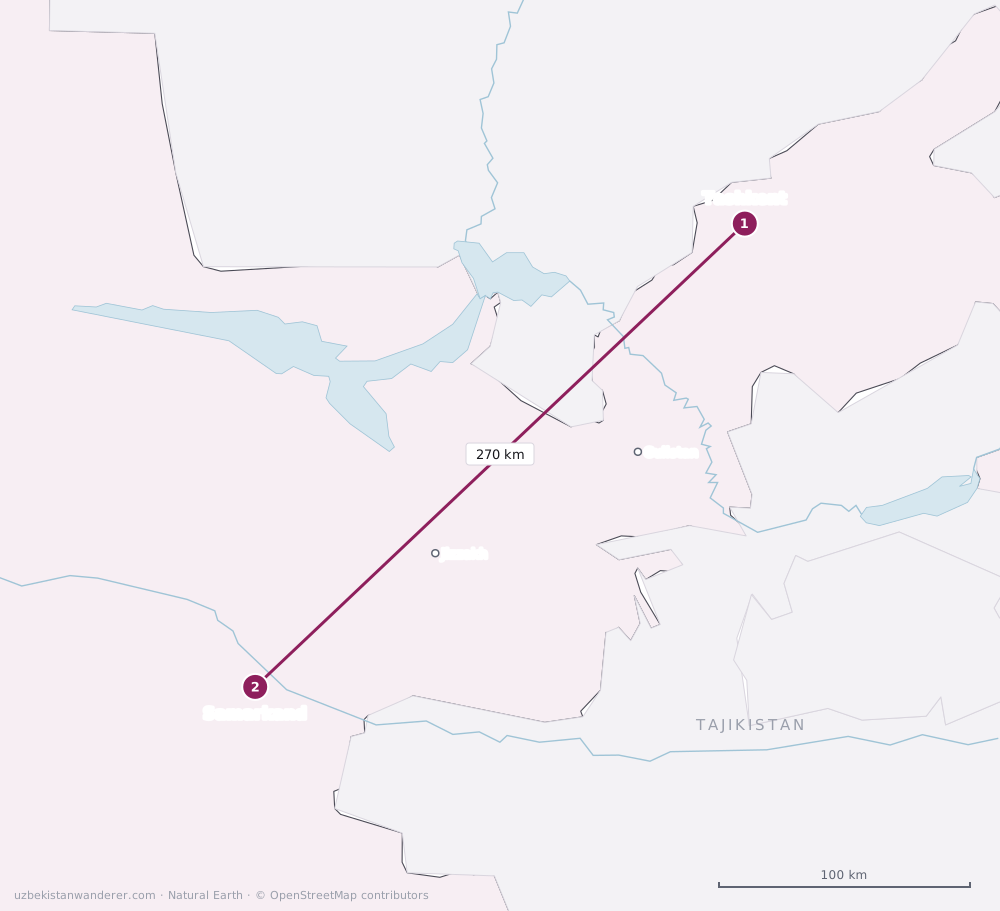
Roughly 300 kilometres by road and about 344 by rail separate Tashkent from Samarkand, and the fastest train covers them in two hours ten. That single number is why almost nobody agonises over this journey. Buy a seat on the Afrosiyob, sit down with a coffee, and you are standing in front of the Registan before lunch.
Where people do come unstuck is the booking. Afrosiyob tickets go on sale about 60 days ahead, and in April, May, September and October the good departures are gone in hours. Travellers who leave it until they land routinely find every seat sold and assume they are stuck. They are not. There are four other ways to make this trip, and one of them is genuinely pleasant.
This is the practical version: what runs, what it costs, how to book it, and what actually happens when you turn up at the station.
The Afrosiyob, and why it is the default
The Afrosiyob is a Spanish-built Talgo 250, capable of 250 km/h and generally doing rather less than that on the flatter stretches west of Tashkent. Several services run daily in each direction, with the useful ones leaving Tashkent between about 06:10 (the 06:10 runs Fridays to Sundays only) and 09:00 and an afternoon or early-evening return. Journey time is 2h10 to 2h30 depending on which stops the service makes.
There are three classes. Economy is a perfectly comfortable four-across seat with a tray table and a power socket, and it is what the overwhelming majority of visitors book. Business gets you three-across seating, more legroom and a small snack. VIP is a handful of seats at the end of the train and is, frankly, not worth half as much again as the business fare for a two-hour hop. There is a restaurant car, though the trolley service usually reaches you first.
Booking it
The official channel is eticket.uzrailpass.uz, the railway’s own site (the old eticket.railway.uz address redirects there), also reachable through its app. It works, it is the cheapest option, and it will occasionally reject a foreign card for no stated reason; foreign payments go through Trainhub, which is the name on your statement. If that happens, resellers such as 12Go and Bookaway take international cards reliably and charge a few dollars for the privilege, worth paying rather than losing the date.
Book with the passport you will actually travel on. The name and number are checked against the document at the station gate, and a mismatch is not something that gets waved through. Print the ticket or save it offline; station wifi is not worth relying on.
The other four options
Sold out is not the end of the conversation. Fares below were last checked in August 2026 and move with the som, so treat them as a guide rather than a quote.
| Option | Journey time | Typical fare | Best for |
|---|---|---|---|
| Afrosiyob (high-speed) | 2h10–2h30 | 311,000 som economy / 455,000 business / 709,000 VIP | Almost everyone |
| Sharq express (classic) | about 3h10 | 200,000 som 2nd class / 300,000 1st | When the Afrosiyob is full |
| Shared taxi | 4–5h door to door | about 100,000–200,000 som per seat | Late decisions, no ticket needed |
| Intercity bus | 5–6h | Roughly 70,000–90,000 som | Tight budgets only |
| Flight (TAS–SKD) | 1h in the air, 3h+ in total | From about $25–40 | Almost nobody |
A few notes on each. The Sharq is an ordinary air-conditioned express, slower, cheaper, and with a rather more Uzbek atmosphere than the sealed calm of the Afrosiyob. It is a good train. People dismiss it only because the fast one exists.
Shared taxis leave from the yard near Olmazor metro station, at the south-western end of the red Chilonzor line; older signs and older drivers still call the stop Sobir Rahimov. You pay for one of four seats and the car goes when the fourth is sold, which might be ten minutes or might be ninety. Buy all four seats and it leaves immediately, around 600,000 to 800,000 som for the whole car, still well under a private transfer. The drivers are quick. Some are quicker than you would like.
The bus is the cheapest thing on the road and eats most of a day once you count getting to the terminal and waiting there. Take it if the budget is genuinely tight; otherwise the train wins on every axis. As for flying: the flight is an hour, but with transfers and check-in you have spent longer than the train and seen nothing. It makes sense only as part of an onward international connection.
At the station
Afrosiyob services use Tashkent’s main station, shown as Toshkent or Tashkent Central on tickets and sometimes called Tashkent North. It’s reached on the metro’s blue Oʻzbekiston line, where the stop is simply called Toshkent, and our walkthrough of the metro covers the interchanges if you are coming from the other side of the city. Do not confuse it with Tashkent South, seven kilometres away, which handles other services. Check the station name printed on your ticket before you get into a cab.
Arrive thirty minutes early, forty-five in peak season. Entry is through an airport-style security check where a guard checks your ticket (the QR code on your phone is normally accepted, though a paper copy is a sensible backup) and your passport together, and the queue can be long even when the concourse looks empty. Boarding closes before departure and the railway is strict about it. The doors shut, the train goes. This is not a network that waits.
Samarkand’s station sits a few kilometres north-west of the old city. Yandex Go works there and costs a couple of dollars into the centre; the drivers waiting at the exit will quote considerably more. If you have not sorted a local SIM yet, this is how data works in Uzbekistan, getting a card at the airport makes the taxi apps usable from day one.
Which one to take
Book the Afrosiyob the day your dates are fixed, take an early departure, and buy economy. If the site says sold out, check the Sharq before you look at anything on the road. It is a fraction of the price and only an hour or so slower. Shared taxis are the fallback for travellers who decided over breakfast, and they work perfectly well.
One planning point worth acting on: an early train buys you a full first day in Samarkand rather than half of one, which matters on a short itinerary built around the city. Arrive by nine and the Registan is yours before the tour buses. Sort out where you are sleeping, drop the bags, go.
For the wider picture (night trains, the western desert routes, domestic flights, what a taxi should cost) start with our overview of transport across the country, and read the full Samarkand guide before you go. Seat 61 keeps a detailed timetable page for Uzbek railways that is worth a look if you are chaining several legs together.