Uzbekistan packs more world-class sights into one country than almost anywhere else in Asia: three intact Silk Road cities, Soviet-era art troves, alpine hiking an hour from the capital, and a food culture built around rice, bread, and open fire. With more than 90 nationalities now entering visa-free — including US citizens as of January 2026 (last checked: July 2026) — it has become one of the most rewarding trips you can book. Check the details in our Uzbekistan visa guide.
This list covers the whole country, not just the big three cities. We have grouped the 25 experiences by region so you can string them together logically. Every entry includes a practical hook: how to get there, what it costs, or when to show up.
Samarkand and the South
1. Watch Sunset over the Registan
Three tilework-covered madrasas facing a single square: the Registan is Uzbekistan’s defining image, and it earns the hype. Entry costs 100,000 som, roughly $8, after price hikes in early 2026 (last checked: July 2026), and the complex opens from about 8am to 8pm. Come twice — inside during the day, then back to the free viewing steps at dusk, when a nightly light show plays across the facades. Full timing advice is in our Samarkand travel guide.
2. Walk the Avenue of Tombs at Shah-i-Zinda
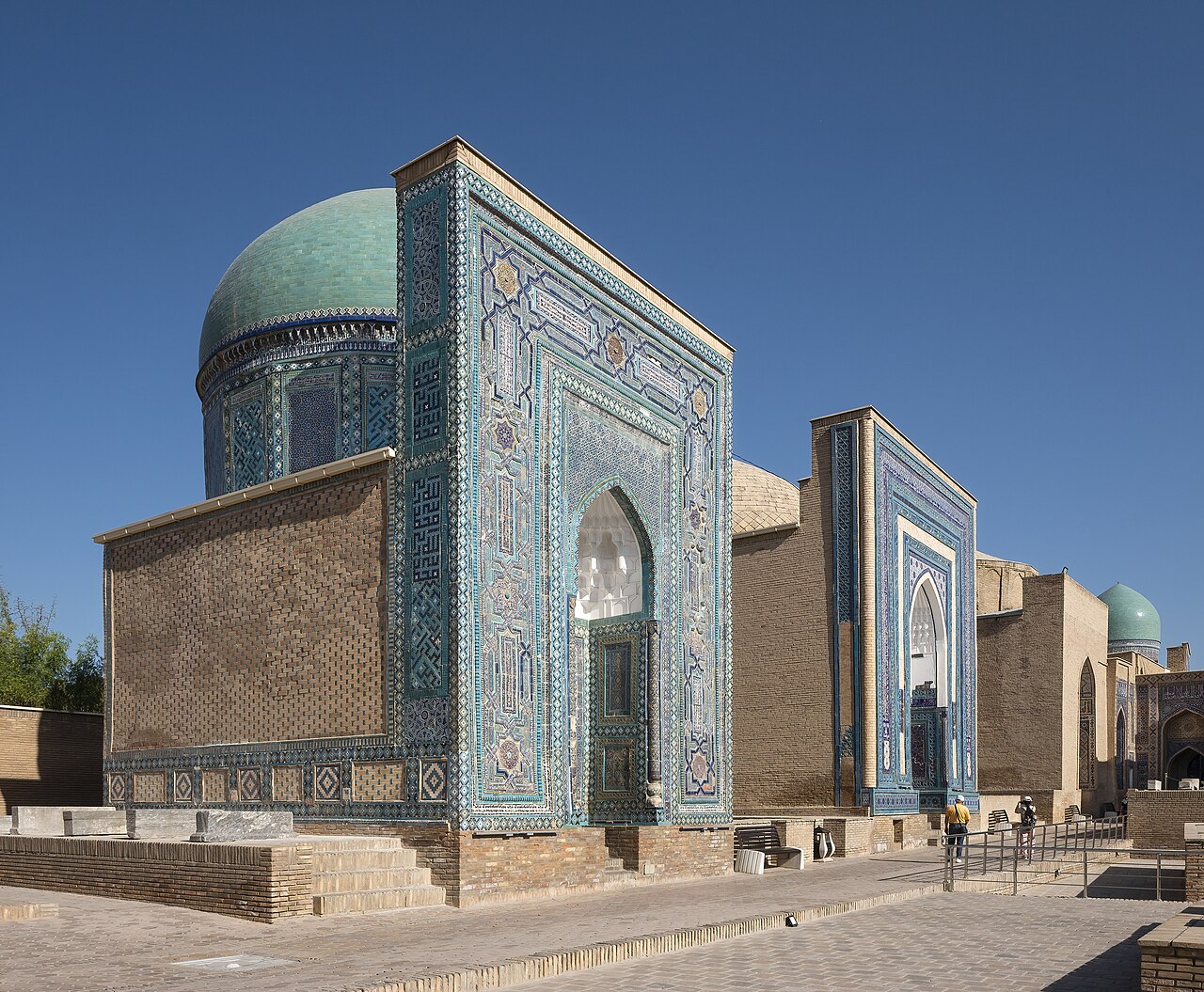
Shah-i-Zinda is a narrow lane of mausoleums climbing a hillside on Samarkand’s edge, and the tilework here is finer than anything at the Registan. It is an active pilgrimage site, so dress modestly and keep your voice down. Arrive at opening, around 8am, to photograph the corridor empty; by mid-morning tour groups fill it shoulder to shoulder. Count the entrance steps — tradition says a matching count up and down brings good fortune.
3. Pay Respects at Gur-e-Amir, Tamerlane’s Tomb
Amir Timur — Tamerlane to the West — conquered everything from Delhi to Damascus, and his mausoleum is suitably theatrical: a ribbed turquoise dome over an interior sheathed in gold. It is compact, so 45 minutes is plenty. Visit in the evening if you can; the building is floodlit after dark and far quieter than at midday.
4. Shop and Snack Your Way Through Siyob Bazaar
Samarkand’s main market sprawls beside the Bibi-Khanym Mosque and is the best place to buy the city’s famous non bread — dense, glossy loaves stamped with patterns, said to stay fresh for weeks. Go in the morning when the bread comes out hot, and graze on dried apricots, halva, and mountain honey as you walk. Haggle mildly on nuts and fruit; bread prices are fixed and cheap.
5. Day-Trip to Shakhrisabz, Timur’s Hometown
Two hours south of Samarkand over a scenic mountain pass sits Shakhrisabz, where the ruined 38-metre portal of Timur’s Ak-Saray palace still towers over the town. The whole historic centre is UNESCO-listed and sees a fraction of Samarkand’s crowds. Hire a shared or private taxi for the day — expect around $30–40 for a private car round trip — and pack water; sights are spread across a long park.
Bukhara: The Living Museum
6. Get Lost in Bukhara’s Old Town
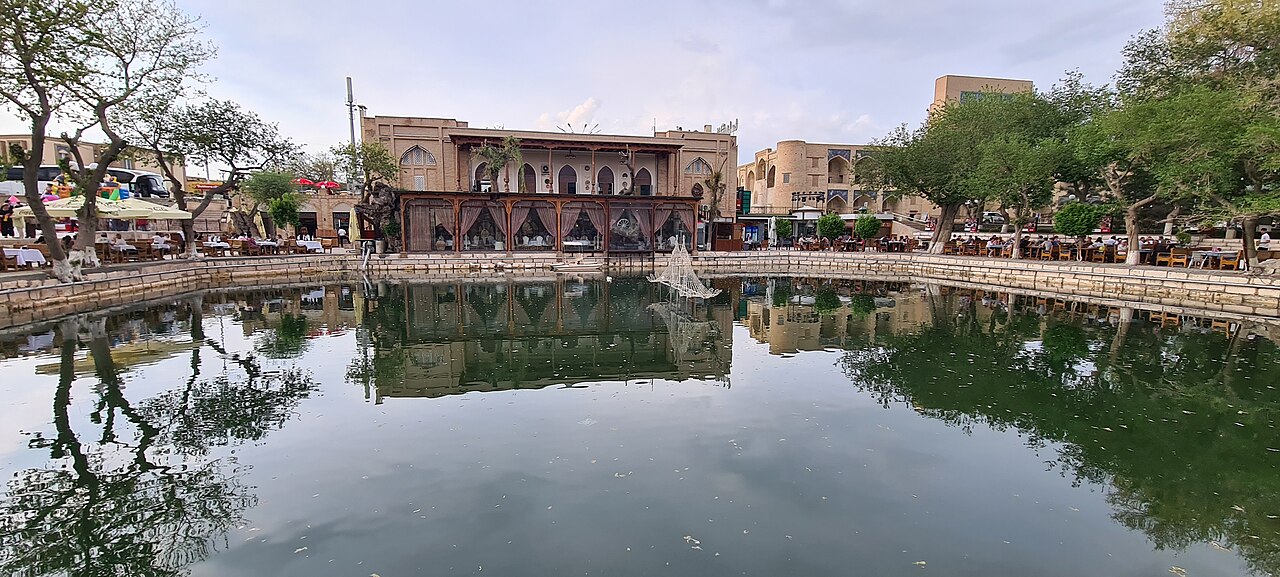
Bukhara is the best-preserved medieval city in Central Asia — over 140 protected buildings threaded by lanes that have not changed shape in centuries. Unlike Samarkand, everything sits within a walkable core, so skip taxis entirely and wander. Base yourself near Lyabi-Hauz, the pond-centred plaza shaded by mulberry trees, and give the city two full days. Our Bukhara travel guide maps out a walking route.
7. Stand Beneath the Kalyan Minaret
The 47-metre Kalyan Minaret has stood since 1127 — Genghis Khan reportedly spared it out of admiration when he flattened the rest of the city. The surrounding Po-i-Kalyan ensemble, with its mosque courtyard and the still-functioning Mir-i-Arab madrasa, is Bukhara’s grandest space. Come at sunrise before the vendors set up, then return after dark when the whole complex is lit and locals stroll the square.
8. Tour the Ark Fortress
Bukhara’s rulers governed from this massive raised citadel for over a millennium, until the Red Army bombed it in 1920. Its ramparts hold throne rooms, a mosque, and museums covering the emirate’s often brutal history — the infamous “bug pit” jail, where two British officers were held before their 1842 execution, is nearby. Budget 90 minutes and go early; the exposed walls bake in the afternoon.
9. Sweat It Out in a 16th-Century Hammam
Bozori Kord hammam has been steaming Bukharans since the 1500s, and it still runs daily — men and women admitted at separate hours, so check the schedule at the door. A session with a scrub and massage costs around $15–25 and takes about an hour: heat, a vigorous rub-down on hot stone, then a ginger-and-honey rub that leaves your skin tingling. Bring your own towel and flip-flops or rent theirs.
10. Haggle Under the Trading Domes
Bukhara’s toki — domed bazaar crossroads built in the 1500s — still shelter merchants selling suzani embroidery, carpets, miniatures, and knives from Chust. Quality varies wildly, so handle goods before buying: real silk suzani feels cool and heavy, machine-made copies feel slick. Opening offers usually drop 30–40 percent with polite bargaining. Stork-shaped scissors make a light, genuinely local souvenir.
Khiva and the Far West
11. Enter the Walled City of Itchan Kala
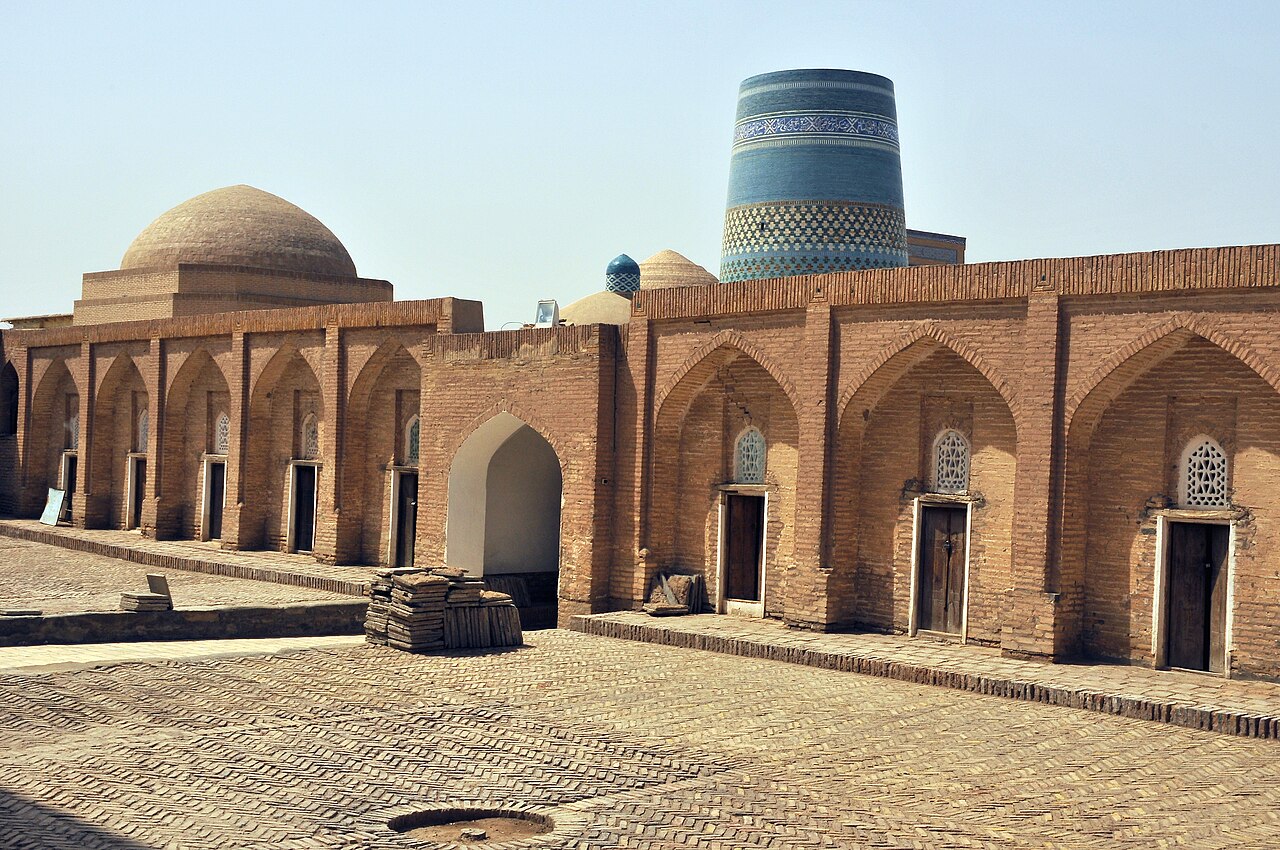
Khiva’s inner town is a complete walled Silk Road city — mud-brick ramparts, fifty-plus monuments, and the squat, unfinished turquoise Kalta Minor minaret. It was Uzbekistan’s first UNESCO World Heritage site, and a two-day combined ticket covers most interiors. Stay inside the walls if you can; once the day-trippers leave around 6pm, you get the lanes almost to yourself. See our Khiva travel guide for ticket details.
12. Climb a Minaret or Watchtower for Sunset
Khiva at golden hour is the single best cityscape in Uzbekistan. The Kunya-Ark fortress watchtower and the tall Islom Hoja minaret both offer rooftop-level views across a skyline of domes and minarets with the Karakum desert beyond. The watchtower charges a small separate fee and gets crowded 30 minutes before sunset, so claim a spot early. The minaret stairs are steep, dark, and not for the claustrophobic.
13. See Banned Soviet Art at the Savitsky Museum in Nukus
In remote Nukus, painter Igor Savitsky quietly amassed tens of thousands of avant-garde works that Stalin’s censors had banned, hiding them in plain sight in Karakalpakstan. The result is one of the world’s great collections of Russian avant-garde art, hanging where almost nobody thought to look. The museum opens Tuesday to Sunday, with foreigner tickets around 100,000 som (last checked: July 2026). It pairs naturally with a Moynaq trip.
14. Stand Among the Rusting Ships of Moynaq
Moynaq was a fishing port until the Aral Sea — drained by Soviet cotton irrigation — retreated more than 100 kilometres away. A dozen rusting trawlers now sit beached on the old seabed, one of Central Asia’s most sobering sights. It is about three hours from Nukus; a daily marshrutka leaves around 9am and returns mid-afternoon, or a private taxi runs roughly $60 round trip. The small museum beside the ships is worth 20 minutes.
15. Overnight at the Aral Sea Itself
Reaching the water that remains requires a 4×4 expedition across the Ustyurt Plateau — canyons, gas flares, salt flats — ending at a yurt camp on the shore of the shrunken sea. Two-day trips run from Nukus or Khiva from around $250 per person shared. You can float in water saltier than the Dead Sea, then eat dinner under some of the darkest skies you will ever see. Book ahead for May, June, September, and October.
Tashkent and the Mountains
16. Ride the Tashkent Metro, Station by Station
Tashkent’s metro doubles as an underground art gallery: chandeliers at Kosmonavtlar, cotton-boll ceramics at Pakhtakor, space-race medallions honouring Soviet cosmonauts. Photography was banned until 2018; now you can shoot freely. A ride costs a few thousand som — pennies — and you pay by tapping a bank card at the turnstile. Do a self-guided loop of six or seven stations in an hour. More routes in our Tashkent travel guide.
17. Dive into Chorsu Bazaar
Under a huge turquoise dome, Chorsu is Tashkent’s belly: pyramids of spices, aisles of fermented dairy, kurt cheese balls, and Korean-Uzbek salad vendors — a legacy of the Koryo-saram community deported here in the 1930s. Go hungry and graze. The dome hall holds meat and dairy; produce sprawls around it. Mornings are liveliest, and it winds down by late afternoon.
18. Eat Plov Where It’s Cooked by the Cauldron-Load
Plov — rice, lamb, carrots, and rendered fat cooked in a giant kazan — is Uzbekistan’s national dish, and Tashkent’s Central Asian Plov Centre (Besh Qozon) is its temple. Cooks stir cauldrons the size of hot tubs, and the day’s plov often sells out by 1:30pm, so arrive before noon. Each region cooks it differently; try Samarkand’s layered version and Fergana’s darker rice too. Our Uzbek food guide breaks down the styles.
19. Hike or Ski the Chimgan Mountains
Ninety minutes from Tashkent, the western Tian Shan rises past 3,000 metres. In summer, hike day trails around Greater Chimgan and swim in the turquoise Charvak reservoir; in winter, the modern Amirsoy resort runs European-standard lifts at a fraction of Alpine prices. The Sunday crowd from Tashkent is heavy in high season, so go midweek. Shared taxis and organised day tours both make it an easy add-on to the capital.
20. Visit the Hazrati Imam Complex and the Ancient Quran
Tashkent’s spiritual heart holds one of the oldest Quran manuscripts in existence — the massive Uthman Quran, traditionally dated to the 7th century, brought to Samarkand by Timur and now displayed in a climate-controlled hall. The surrounding ensemble of mosques and madrasas is free to wander; the manuscript hall charges a small fee. Dress modestly, and note the library museum closes earlier than the courtyards.
Fergana Valley and Desert Experiences
21. Watch Master Potters at Work in Rishtan
Rishtan has produced ceramics for around 800 years, and its cobalt-and-turquoise glazes — made with local clay and natural ishkor ash glaze — are Uzbekistan’s most collectible craft. Family workshops such as the Rustam Usmanov studio welcome visitors: watch throwing and painting, then buy directly from the maker at a fraction of Tashkent gift-shop prices. Ask for pieces fired with traditional glazes, and have larger platters bubble-wrapped — they survive checked luggage surprisingly well.
22. Follow Silk from Cocoon to Loom in Margilan
Margilan’s Yodgorlik factory still makes ikat silk entirely by hand: boiling cocoons, unwinding filament, tie-dyeing thread bundles, and weaving the blurred-edge atlas patterns Uzbekistan is famous for. The free guided tour takes about 45 minutes and ends, naturally, in a shop where scarves start around $10–15. The Fergana Valley is a half-day drive or a scenic train ride from Tashkent.
23. Sleep in a Yurt by Aydarkul Lake
Between Samarkand and Bukhara, the Kyzylkum desert hides Aydarkul, a huge accidental lake created by Soviet-era flooding. Yurt camps near Yangikazgan and Dungelek offer the classic package: a camel ride at sunset, dinner around the fire with a local akyn singer, and a night under felt with more stars than sky. Camps run roughly April to October, from about $35–50 per person with meals. It slots neatly into the drive between the two cities.
24. Ride the Afrosiyob High-Speed Train
Uzbekistan’s Spanish-built Talgo trains hit 250 km/h, turning Tashkent–Samarkand into a smooth ride of just over two hours and Samarkand–Bukhara into about 90 minutes. The journey itself — tea service, desert scenery, spotless carriages — is a highlight, not just transport. Book on the official Uzbekistan Railways site or app as soon as sales open, about 45 days out; popular departures sell out days ahead in high season (last checked: July 2026).
25. Trace Buddhist History in Termez
Long before Islam arrived, the far south around Termez was a centre of Buddhist learning on the road to India. Visit the Fayaz Tepe monastery ruins, the Kara Tepe cave complex, and the strong archaeological museum in town, with the Amu Darya river and Afghanistan beyond. Fly from Tashkent in about an hour or take an overnight train. Bring your passport for checkpoints — this is a border zone, though tourists visit routinely.
Frequently Asked Questions
How many days do you need in Uzbekistan?
Ten days is the sweet spot for the classic route: Tashkent, Samarkand, Bukhara, and Khiva with a desert yurt night in between. A week covers the big three cities comfortably if you skip Khiva; adding Karakalpakstan or the Fergana Valley needs two full weeks. Our 10-day itinerary shows how the pieces fit together with train times.
When is the best time to visit Uzbekistan?
April to early June and September to early November are ideal — warm days, cool nights, comfortable sightseeing. July and August regularly exceed 40°C in Bukhara and Khiva, making midday touring genuinely unpleasant, though hotel prices drop. Winter is cold but atmospheric, with snow occasionally dusting the Registan and very few tourists. Desert yurt camps mostly close from November to March.
Do I need a visa for Uzbekistan?
Probably not. Citizens of more than 90 countries — including the UK, EU states, Japan, South Korea, Australia, and, since January 2026, the United States — enter visa-free for up to 30 days (last checked: July 2026). Most other nationalities can get a $20 e-visa in a few days through the official e-visa portal. Hotels handle the required registration automatically; keep the slips if you stay in homestays.
Is Uzbekistan expensive to travel?
No — it remains one of the best-value destinations anywhere. A generous meal with tea costs $3–8, comfortable guesthouses run $25–50 a night, and high-speed train tickets between major cities are typically under $20–40. Entry fees have risen sharply in recent years, so budget $10–25 per day for sights in Samarkand and Khiva.
Is Uzbekistan safe for tourists?
Yes. Violent crime against visitors is rare, streets feel safe at night in tourist cities, and locals are famously hospitable — expect invitations to tea. The annoyances are minor: occasional taxi overcharging (use the Yandex Go app), summer heat, and uneven pavements. Solo female travellers generally report positive experiences, though modest dress is appreciated at religious sites.
Plan Your Trip
Treat this list as a menu rather than a checklist: the big three cities plus one desert or mountain detour makes a superb first visit, and the far west or Fergana Valley gives you a reason to come back. Start with our guide to where to stay in Uzbekistan, then book those Afrosiyob tickets early. Uzbekistan rewards travellers who plan the trains and wing the rest.
Featured image: Petar Milošević (CC BY-SA 4.0) via Wikimedia Commons.