Khiva Travel Guide: Inside the Walled City of Itchan Kala
Plan your Khiva trip: Itchan Kala tickets, top sights, the new high-speed train, desert fortress day trips, and how many days you really need.

Khiva is the smallest, most remote, and arguably the most atmospheric of Uzbekistan’s three great Silk Road cities. While Samarkand dazzles with monumental scale and Bukhara sprawls into a living old town, Khiva concentrates everything into Itchan Kala, a walled inner city of roughly 26 hectares where more than 50 monuments and hundreds of traditional houses sit packed between mud-brick ramparts. It was the first site in Uzbekistan inscribed on the UNESCO World Heritage List, back in 1990, and it remains the best-preserved example of a Central Asian khanate capital anywhere.
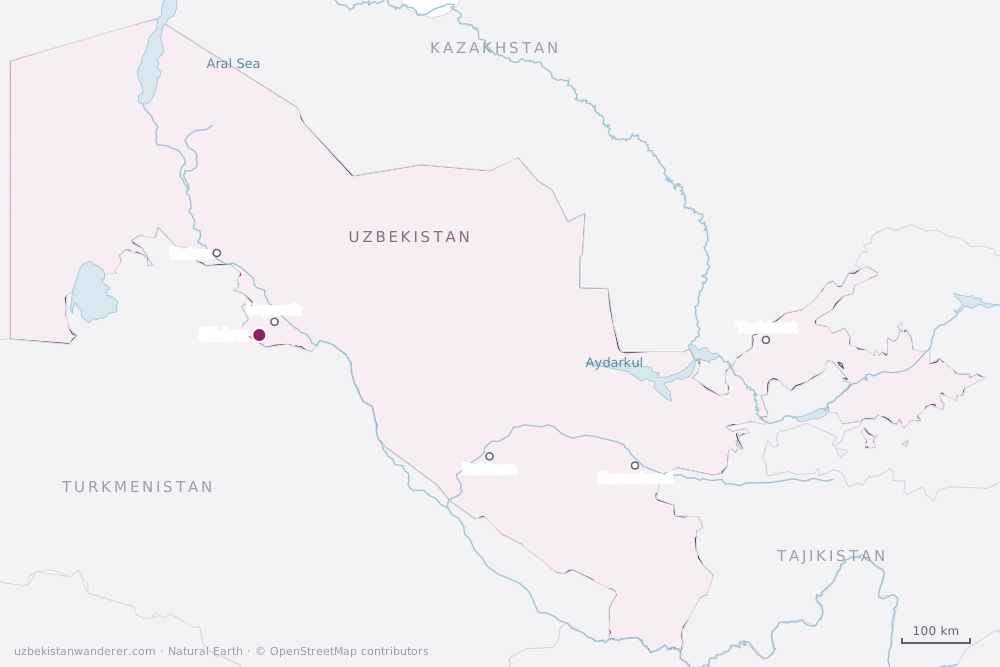
Getting here used to be the hard part: Khiva sits in the Khorezm oasis, over 1,000 km from Tashkent across the Kyzylkum Desert, and for years the choice was a short flight or a 14-hour sleeper train. That changed in May 2026, when Uzbekistan launched a direct high-speed train covering Tashkent to Khiva in about seven and a half hours, which makes Khiva far easier to fit into an Uzbekistan itinerary.
Here’s what to see inside the walls, how the ticket system works, how to get here, and the desert fortress day trip most visitors skip but shouldn’t.
Itchan Kala: What You’re Actually Looking At
Itchan Kala means “inner fortress”, the walled core of old Khiva, enclosed by roughly 10-meter-high crenellated walls running about 2.2 km around the perimeter. Four gates pierce the walls at the cardinal points; most visitors enter through the West Gate (Ota Darvoza), by the main road and ticket offices. Inside, two main streets cross between the gates, lined with madrasas, mosques, minarets, and caravanserais.
A quick note on authenticity, because it comes up in every conversation about Khiva. Much of what you see was heavily restored in the Soviet era, and the inner city can feel more open-air museum than lived-in town. Fair, but it undersells the place. Around 300 families still live inside the walls, the monuments are genuinely old even where the plasterwork is new, and at sunrise and after sunset, when the day-trippers leave, Itchan Kala is one of the most evocative places in Central Asia.
The Ticket System, Explained
Walking into Itchan Kala and strolling its streets is free. What you pay for is a combined museum ticket that covers entry to the monuments and museums inside the walls.
- Combined ticket: about 250,000 som (around US$20) in 2026 visitor reports, valid for two days, sold at booths by the city gates; confirm the price at the West Gate ticket office (last checked: September 2026). It covers roughly 16 sites, including the Kunya-Ark, Juma Mosque, Tash Hauli Palace, and most madrasas and museums.
- Not included: climbing the Islam Khodja minaret (100,000 som), the city wall walk (about 40,000 som), often the Kunya-Ark watchtower, and the Pahlavan Mahmud Mausoleum (about 25,000 som). Our ticket explainer has the full list of extras.
- Keep the ticket on you. Attendants at each monument check and sometimes stamp it, and the two-day validity means you can spread your sightseeing out, worth doing.
Prices in Uzbekistan have been rising steadily, so treat the numbers above as a guide rather than gospel, and see our Uzbekistan travel costs breakdown for how Khiva fits into an overall budget. For named restaurants inside and outside the walls, and what a meal really costs, read where to eat in Khiva.
The Essential Sights Inside the Walls
Kalta Minor Minaret
The first thing you’ll see through the West Gate is Khiva’s most photographed oddity: a squat, massively fat minaret sheathed entirely in bands of turquoise, blue, and white glazed tile. Mohammed Amin Khan began it in 1852, reportedly intending the tallest minaret in the Islamic world; he died in 1855, construction stopped at about 29 meters, and nobody ever finished it: Kalta Minor literally means “short minaret.” You can’t climb it, but it’s the backdrop to half the photos ever taken in Khiva.
Kunya-Ark Citadel
The “old fortress” against the western wall was the khans’ own citadel, a fortress within the fortress, founded in the late 17th century. Inside are the throne room (kurinish khana) with a spectacular blue-tiled iwan, a majolica-wrapped summer mosque, the old mint, and the harem quarters. The highlight is the Ak Sheikh Bobo watchtower on the bastion above (separate small ticket), the classic viewpoint over Itchan Kala’s rooftops and minarets.
Juma Mosque
Khiva’s Friday mosque is unlike any other in Uzbekistan: a dim, flat-roofed hall supported by 212 carved wooden columns and lit only by a few small openings in the roof. The building dates from the 18th century, but the columns span a millennium, the oldest, salvaged from earlier structures, carry 10th-century Kufic inscriptions, and every one is different. Cool, quiet, and slightly hypnotic, it’s the perfect midday refuge from the desert sun.
Islam Khodja Minaret and Madrasa
At 56.6 meters, this slender tower banded in turquoise tile is the tallest minaret in Khiva, and, remarkably, one of the newest buildings in Itchan Kala, completed in 1910 for the khanate’s reformist grand vizier. You can climb to a viewing platform about 45 meters up for the highest panorama in the city. Fair warning: the spiral staircase is steep, dark, and narrow, with very high steps and two-way traffic, not for dodgy knees or claustrophobia, but the view over the walled city to the desert beyond is worth every awkward step.
Tash Hauli Palace and Pahlavan Mahmud Mausoleum
Two more stops worth prioritizing. Tash Hauli (“stone house”), on the eastern side, was the 19th-century palace of Allakuli Khan; its harem courtyard has some of the finest tilework in the city. The Pahlavan Mahmud Mausoleum is Khiva’s spiritual heart: the tomb of a 14th-century wrestler-poet-saint, crowned by the city’s most beautiful turquoise dome and still an active pilgrimage site. It charges a separate small entry fee; go respectfully.
The City Walls at Sunset
Whatever else you do in Khiva, be on or beside the walls in the last hour before sunset, when the ramparts glow a deep amber and the crowds thin out. The most popular spot is the walkable wall section near the North Gate (small fee); the Kunya-Ark watchtower is the other classic choice, though it draws a crowd. Outside the walls, the west side near Ota Darvoza gives the best ground-level view of the ramparts themselves. Sunrise, if you can manage it, is even better, you’ll have the streets almost to yourself.
How Many Days Do You Need in Khiva?
Our honest answer: two nights, one and a half days. Itchan Kala is compact enough to cover the headline monuments in a single focused day, but staying two nights means you get an evening and an early morning inside the walls, the quiet hours that make Khiva special, and exactly what the two-day combined ticket is designed around.
Add a third night for the desert fortresses day trip (below). Day-trippers who bus in for three hours see the monuments but miss the mood, and the mood is the point.
Getting to Khiva
Khiva’s transport hub is Urgench, about 30–35 km away, though Khiva has its own railway station roughly 1.5 km south of Itchan Kala. How the options compare (last checked: September 2026):
| Option | Duration | Approx. cost | Notes |
|---|---|---|---|
| High-speed train from Tashkent | ~7.5 hours | Check eticket.uzrailpass.uz | Direct to Khiva; leaves 07:00 Tue/Thu/Sat, returns 07:20 Wed/Fri/Sun |
| Overnight sleeper train from Tashkent | 14–16 hours | ~$20–35 | Direct to Khiva; saves a hotel night |
| Flight Tashkent–Urgench | ~1 hr 50 min | From ~$50–65 one-way | Daily; then 35–45 min taxi to Khiva |
| Train/taxi from Bukhara | ~3h40 (Manguberdi, Tue/Thu/Sat, 10:54 → 14:31) to 7 hours | Varies | The classic Silk Road leg; shared taxis cross the Kyzylkum |
The New High-Speed Train
Launched on 5 May 2026, the Hyundai Rotem-built high-speed service (named Jaloliddin Manguberdi) runs the 1,022 km from Tashkent to Khiva in about 7.5 hours, stopping at Samarkand, Bukhara, and Urgench and reaching 250 km/h on upgraded sections. At launch it departed Tashkent at 07:00 on Tuesdays, Thursdays and Saturdays, arriving in Khiva at 14:31, with returns leaving Khiva at 07:20 on Wednesdays, Fridays and Sundays, per Kun.uz's launch report. Seat61 lists 780,000 som in Economy from Tashkent (June 2026); check current prices and book on eticket.uzrailpass.uz, where tickets open about 60 days ahead. Frequencies should increase, and an extension toward Nukus is planned.
Sleeper Trains and Flights
The conventional overnight trains from Tashkent still run and remain the budget favorite: around 14–16 hours in a four-berth kupe compartment, arriving directly at Khiva station, The Man in Seat 61 has an excellent rundown of classes and booking. Flying is fastest: Uzbekistan Airways and Centrum Air fly Tashkent–Urgench daily in just under two hours, with one-way fares from around $50–65. From Urgench airport, a taxi to Khiva takes 35–45 minutes; agree the price first (Yandex Go works in Urgench and beats airport touts). For the full picture, see how trains, shared taxis and flights fit together.
Day Trip: The Desert Fortresses of Ancient Khorezm
The best day trip from Khiva has nothing to do with mosques and madrasas. Across the Amu Darya river, on the fringe of the Kyzylkum Desert in Karakalpakstan, stand the ruined fortresses of ancient Khorezm, colossal mud-brick citadels, some more than 2,000 years old, collectively nicknamed Elliq Qala (“fifty fortresses”).
The two essential stops are Toprak-Kala, a 2nd–3rd century AD royal city of the Khorezmian kings with its palace outlines still legible in the eroded walls, and Ayaz-Kala, a dramatic trio of hilltop fortresses rising from empty desert, the oldest dating to the 3rd–2nd century BC, possibly earlier. No ticket booths, no barriers, often no other visitors, just wind, sand, and staggering scale. It’s the closest Uzbekistan gets to time travel, and a vivid complement to the Silk Road history of the cities.
Practicalities: the fortresses lie 90–115 km from Khiva, about 1.5–2 hours’ drive each way. There’s no public transport, so hire a driver through your guesthouse or book a tour, roughly $50–115 per car for a full day depending on how many fortresses you include. Bring water, sun protection, and sturdy shoes; there is zero shade, and in July and August the desert regularly hits 40–45°C, so this trip is far better in spring or autumn. If your schedule allows, add a night at the yurt camp below Ayaz-Kala.
Practical Tips for Visiting Khiva
- Stay inside or just outside the walls. Guesthouses and boutique hotels inside Itchan Kala put you steps from everything at dawn and dusk; cheaper options cluster around the gates.
- Best seasons: April–May and September–October. Summer in Khorezm is brutal (40°C+), and winter is cold and windy, though the low-season emptiness has its own appeal.
- Bring cash. Card acceptance is patchy and ATMs can run dry; ticket booths and small guesthouses generally want som.
- Food is different here. Try shivit oshi (bright-green dill noodles with meat stew) and tukhum barak (egg-filled dumplings), Khorezm specialties hard to find elsewhere; our Uzbek food guide covers the national classics too.
- Dress and etiquette: Khiva is relaxed, but the Juma Mosque and Pahlavan Mahmud Mausoleum are religious sites, cover shoulders and knees, and defer to attendants during prayers.
- After dark: the walls and main monuments are illuminated, and the main street stays lively with craft stalls in season.
Frequently Asked Questions
How much does it cost to enter Itchan Kala?
Walking the streets is free; the combined museum ticket costs about 250,000 som (about US$20) in 2026 visitor reports and is valid for two days (last checked: September 2026). It covers most monuments and museums, but the Islam Khodja minaret climb costs an extra 100,000 som, the wall walk about 40,000 and the Pahlavan Mahmud Mausoleum about 25,000. Buy tickets at the booths beside the gates.
Is Khiva worth visiting compared to Samarkand and Bukhara?
Yes, and it’s the most distinctive of the three. Samarkand has the grandest monuments and Bukhara the most lived-in old town, but nowhere else in Central Asia gives you a complete walled city this intact. With ten days or more, include all three; our 10-day itinerary shows how they fit together.
How do I get from Tashkent to Khiva fastest?
Flying to Urgench is quickest: just under two hours in the air plus a 35–45 minute taxi, from around $50–65 one-way. The new high-speed train is the best overland option at roughly 7.5 hours direct to Khiva, though as of mid-2026 it runs only three days a week each way. The overnight sleeper is cheapest, trading 14–16 hours for a saved hotel night.
How many days should I spend in Khiva?
Two nights works best: one full day for the monuments plus the sunset and sunrise hours that day-trippers miss. Add a third night for the Ayaz-Kala and Toprak-Kala desert fortresses, which take a full day. Less than a day in Khiva is possible but sells the place short.
Can you climb the minarets in Khiva?
You can climb the Islam Khodja minaret, the city’s tallest at 56.6 meters, via a steep, dark spiral staircase to a platform around 45 meters up. The unfinished Kalta Minor cannot be climbed. For an easier viewpoint, take the Kunya-Ark watchtower or the walkable wall section near the North Gate.
Do I need a visa to visit Khiva?
Khiva has no special requirements beyond Uzbekistan’s national rules: citizens of about 90 countries, including the UK and EU states, enter visa-free for up to 30 days, and US citizens have had the same 30 days visa-free since 1 January 2026; most others can use a simple e-visa. See our Uzbekistan visa guide for the current list and process.
Final Thoughts
Khiva rewards travelers who give it time. See the big monuments, yes, but build your visit around the edges of the day, when the tour buses are gone and the walled city belongs to the people who stayed the night. With the new high-speed train shrinking the distance from Tashkent, there’s never been an easier moment to reach the far end of Uzbekistan’s Silk Road, and no better place to end it than inside these walls.