Uzbek food is one of the best reasons to visit Central Asia, and one of the least understood before you arrive. This is a cuisine built on rice, lamb, wheat, and fruit — slow-cooked in cast-iron kazans, baked in tandyr ovens, and served with endless pots of green tea. In this guide we cover the 15 dishes and food experiences you should not leave Uzbekistan without trying, where to find the best version of each, and the practical details, vegetarian options, etiquette, food safety — that most guides skip. Still planning your route? Our 10-day Uzbekistan itinerary pairs well with this list.
The Classics
1. Plov, the national dish, in four regional styles
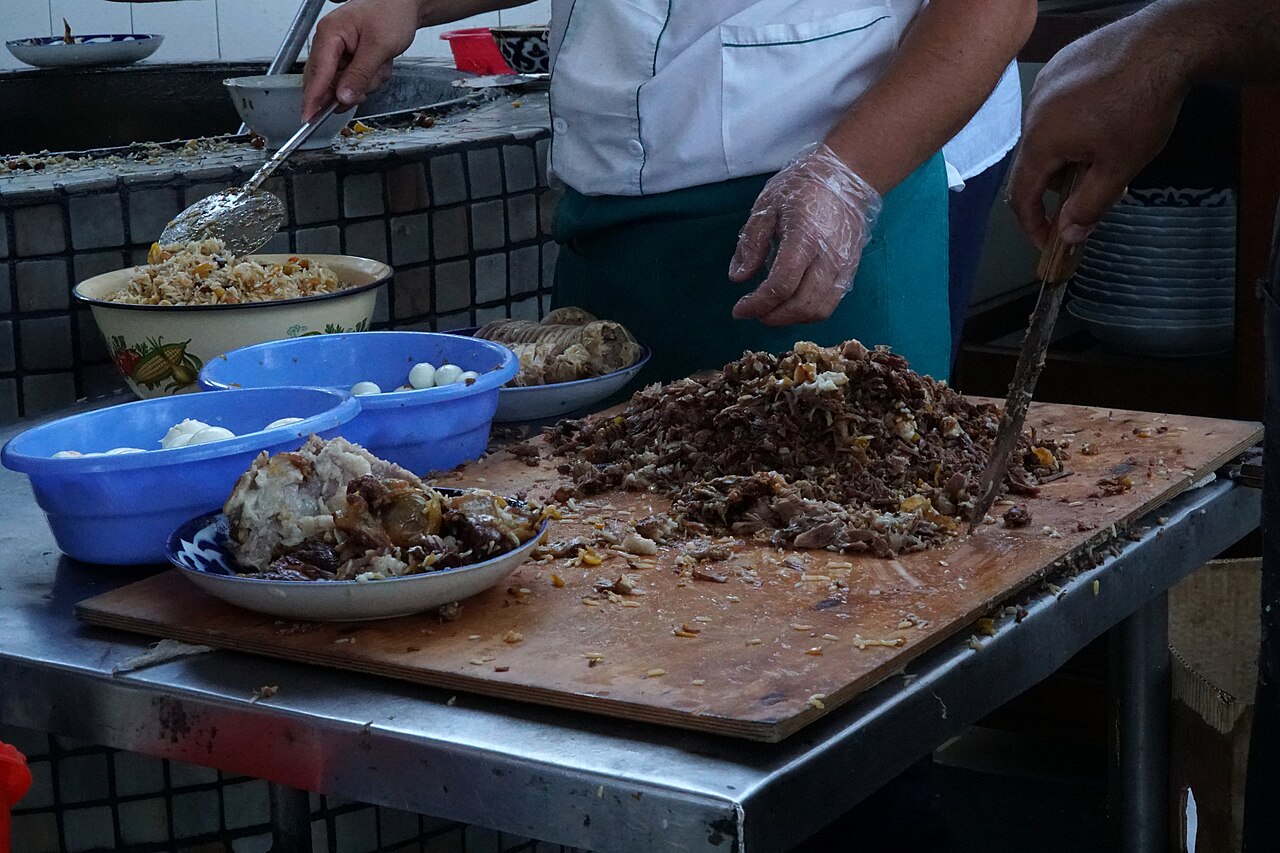
Plov (also called osh or palov) is rice cooked in a kazan with lamb, carrots, onions, and rendered fat — and it’s so central to Uzbek life that UNESCO lists palov culture as intangible heritage. The key thing to know is that plov changes as you travel. Tashkent plov uses orange carrots and often chickpeas and raisins. Fergana Valley plov is darker and richer, made with the prized pink-husked devzira rice. Samarkand plov is the elegant one: rice, meat, and yellow carrots are layered rather than mixed, then steamed and served in visible strata, often with qazi (horse sausage) on top. Bukhara leans sweeter, with dried fruit folded in. Trying at least two regional styles, easy if you follow our Samarkand guide and Bukhara guide — is one of the great pleasures of the trip.
In Tashkent, go to Besh Qozon (the Central Asian Plov Centre) near the TV Tower, where cooks work five giant wood-fired kazans and a heaped plate runs roughly 30,000–50,000 som, about $2.50–4 (last checked: July 2026). Arrive before 1pm — plov is a lunch dish, and when the kazan is empty, it’s empty.
2. Shashlik, skewers over coals
Shashlik is meat — lamb, beef, chicken, or minced kofta-style, threaded onto long metal skewers and grilled over hardwood coals. The classic order is one fatty lamb skewer and one lean, eaten with raw onion, vinegar, and hot non bread. Every town has a shashlik row where smoke pours into the street around sunset; follow the queue of locals rather than the sign in English. A skewer typically costs 12,000–25,000 som depending on the meat (last checked: July 2026).
3. Lagman — hand-pulled noodles
Lagman arrived with the Dungan and Uyghur communities and became an Uzbek staple. Hand-pulled wheat noodles come either in a rich broth with lamb, peppers, and celery (soup lagman) or stir-fried as kovurma lagman. A good bowl has visible wok char, chewy noodles, and a slick of chili oil served on the side. Expect to pay 15,000–30,000 som in a local canteen (last checked: July 2026). The Fergana Valley and Tashkent’s Chorsu area do it particularly well.
4. Manti, steamed dumplings
Manti are palm-sized steamed dumplings filled with hand-chopped lamb, onion, and cubes of tail fat, served with a dollop of smetana (sour cream) or a tomato sauce. In autumn, look for pumpkin manti (oshqovoq manti) — one of the few great vegetarian dishes in the traditional canon. They are eaten by hand or with a spoon, never cut with a knife; the point is to keep the hot broth inside the wrapper until it hits your mouth.
5. Shurpa — the restorative soup
Shurpa is a clear, slow-simmered lamb soup with whole chunks of potato, carrot, tomato, and pepper, finished with fresh dill. It’s what Uzbeks eat when they’re tired, cold, or recovering, and it’s usually the safest order in any roadside canteen because it has been boiling for hours. A bowl often arrives before the main course whether you asked for it or not.
6. Dimlama, the one-pot harvest stew
Dimlama is layered meat, potatoes, carrots, cabbage, onions, tomatoes, and whole garlic heads, sealed in a kazan and steamed in their own juices for hours with no added water. It’s a late-summer and autumn dish, at its best when the vegetables are in season. If you see it on a daily-specials board in September, order it — it rarely appears on printed tourist menus.
7. Mastava, rice soup, plov’s little sibling
Locals call mastava “liquid plov”: a hearty soup of rice, lamb, carrots, and tomato, sharpened with sour milk (katyk) stirred in at the table. It’s a breakfast and lunch dish, common in bazaars and workers’ canteens, and one of the cheapest full meals in the country — often under 15,000 som (last checked: July 2026).
8. Norin — Tashkent’s horse-meat noodles
Norin is the most distinctive dish on this list: sheets of dough are steamed, oiled, and sliced into hair-thin noodles, then tossed with shredded boiled horse meat and slices of qazi (cured horse sausage), onion, and black pepper. It’s served cool or at room temperature, and it’s a Tashkent specialty above all, look for it at Chorsu Bazaar’s food hall or at traditional restaurants such as Milliy Taomlar. Horse meat is a normal, even prestigious, protein in Uzbekistan; if that is a hard no for you, the dish is easy to identify and skip.
Street Food & Snacks
9. Somsa — the tandyr-baked pastry
Somsa are flaky pastries slapped onto the inside wall of a clay tandyr oven and baked until blistered, filled most often with chopped lamb, onion, and fat, but also pumpkin, potato, or wild greens in spring. The best somsa come from hole-in-the-wall bakeries with a queue at 11am, sold for 4,000–8,000 som each (last checked: July 2026). Eat them the local way: bite off a corner, sip out the hot juices, then add a splash of vinegar from the bottle on the counter.
10. Non, bread that outranks everything
Non (also called lepyoshka) is the round tandyr bread stamped with a pattern in the middle, and it carries real cultural weight: it’s never placed upside down, never thrown away, and always torn by hand rather than cut. Every city has its own style — Samarkand non is famously dense and heavy, sold at Siyob Bazaar and often carried home by Uzbek travelers as a gift. Buy it hot from the baker, not from a shop shelf.
11. Chuchvara — little dumplings in broth
Chuchvara are small boiled dumplings, a Central Asian cousin of pelmeni and tortellini — served in broth or fried, with sour cream and vinegar on the side. They are homier and lighter than manti, and a common evening meal. Fried chuchvara with a cold tomato-and-onion salad is an underrated combination that most visitors never order.
12. Achichuk, the salad that fixes everything
Uzbek main courses are rich, and achichuk exists to balance them: paper-thin tomatoes and onions, sometimes chili and basil, with no oil. Order it with every plov and every round of shashlik. Uzbek tomatoes, grown in intense sun, taste the way tomatoes are supposed to — it may quietly become your favorite thing on the table.
Sweets, Fruit & Tea
13. Halva, bazaar sweets by the kilo
Uzbek halva comes in dozens of forms, from crumbly flour-based tahini styles to Samarkand’s specialty: a fudge-like milky halva sold in slabs at Siyob Bazaar. Vendors hand out samples freely — taste three or four before buying by weight. Pair it with navat (crystallized sugar on strings) and walnut-stuffed dried apricots. It travels well, making it the easiest edible souvenir.
14. Melons, a national obsession
From July through October, Uzbekistan’s melons are arguably the best in the world — hundreds of varieties ripened in desert heat and sold from trucks and roadside stacks for next to nothing. The torpedo-shaped Mirzachul melon is the classic. At a bazaar, ask the seller to pick one that is “shirin” (sweet) and they will thump through the pile with professional pride. If you visit in melon season, plan around it, timing tips are in our guide to the best things to do in Uzbekistan.
15. Green tea and the chaikhana
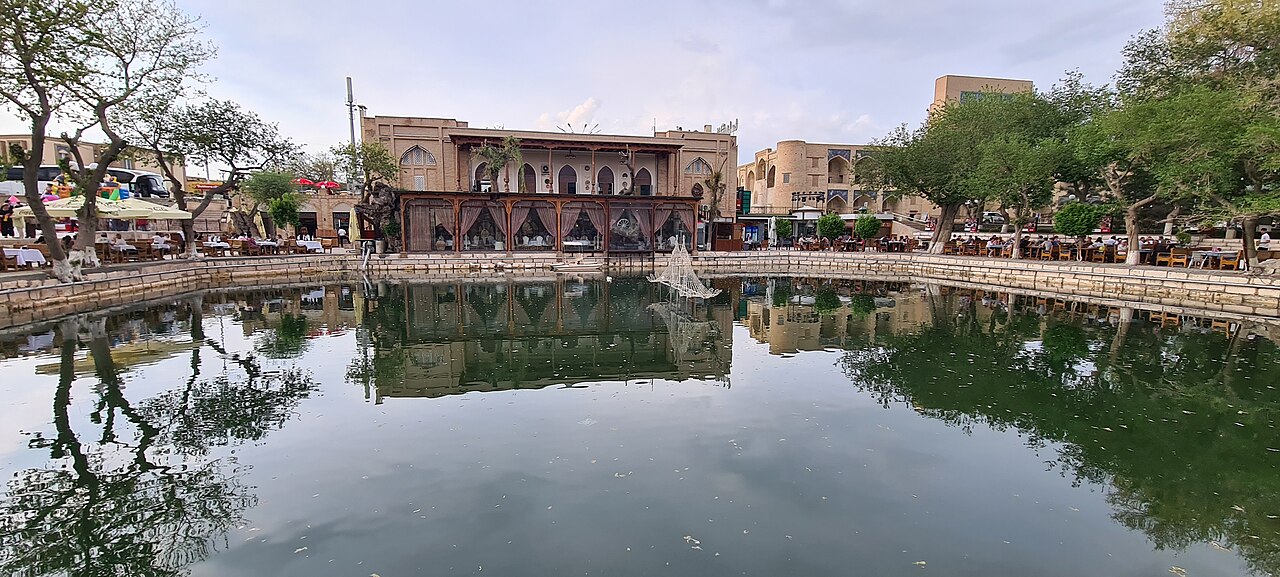
Tea isn’t a drink in Uzbekistan; it’s the operating system. Green tea (kok choy) dominates everywhere except Tashkent, which prefers black. The chaikhana — a teahouse, traditionally set near water and furnished with tapchan platforms, is where meals stretch into afternoons. Watch for the kaytarish ritual: the host pours tea into a piala bowl and returns it to the pot three times to strengthen the brew. Your bowl will be filled only a third full — that is respect, not stinginess, because it means your host intends to keep refilling it hot. Chaikhanas around Bukhara’s Lyabi-Hauz pond are the most atmospheric places to experience it.
Practical Tips: Etiquette, Vegetarian Eating & Food Safety
A few habits will make every meal smoother. Bread etiquette matters most: never place non face-down and never bin it. Accept tea with your right hand, and if you’re pouring for others, fill bowls a third full. Meals in homes and traditional restaurants may begin and end with a short “omin” gesture, palms held up, then drawn down the face; simply pause and follow along. Tipping isn’t traditional, but 5–10% in tourist-oriented restaurants is appreciated, and some places already add a service charge to the bill.
Vegetarians can eat well with some strategy. Reliable orders include pumpkin or potato somsa and manti, achichuk and other salads, fried eggs at guesthouses, bazaar produce, bread, and dairy like suzma (strained yogurt). Be aware that “vegetable” soups are usually made with meat stock, and plov is cooked in animal fat — asking for plov “without meat” gets you the same rice with the lamb picked off. The word to learn is “go’shtsiz” (without meat), said with the understanding that kitchens may interpret it loosely. Vegans will find it genuinely hard outside Tashkent, where a handful of modern cafes cater to plant-based diets.
On food safety, Uzbekistan is better than its reputation, but a few rules hold. Drink bottled or filtered water, not tap. Choose busy places with high turnover, an empty restaurant at 2pm is a bigger risk than a street stall with a queue. Eat plov at lunch, fresh from the kazan, rather than reheated at night. Wash or peel bazaar fruit yourself, and be cautious with unrefrigerated dairy in summer. Carry rehydration salts just in case; most visitors have zero problems, though the richness of the cuisine takes adjustment. Eating extremely well here costs $10–20 per person per day — see our Uzbekistan travel costs breakdown for details.
Frequently Asked Questions
What is the most famous food in Uzbekistan?
Plov, without question. It’s served at weddings, funerals, business lunches, and Thursday family dinners, and each region defends its own version fiercely. If you try only one dish, make it plov from a dedicated plov center at lunchtime, ideally in two different cities so you can taste how much the style changes.
Is street food safe to eat in Uzbekistan?
Generally yes, with normal precautions. Tandyr-baked items like somsa and non come straight out of a very hot oven and are among the safest foods anywhere, and shashlik grilled to order is also low-risk. Avoid lukewarm food that has been sitting out, tap water and ice of unknown origin, and unrefrigerated dairy in high summer.
How much does eating out cost in Uzbekistan?
Very little by Western standards. A full meal in a local canteen costs around 30,000–50,000 som ($2.50–4), while a dinner with salads, mains, and tea in a nice tourist restaurant runs 95,000–150,000 som ($8–13) per person (last checked: July 2026). Street snacks like somsa cost under a dollar. Even deliberately splurging every day, food is a minor line item in an Uzbekistan budget.
Can vegetarians survive in Uzbekistan?
Survive comfortably, yes; eat as varied a diet as meat-eaters, no. Pumpkin somsa and manti, egg dishes, salads, bread, dairy, nuts, and spectacular fruit will keep you well fed, and Tashkent has proper vegetarian-friendly cafes. The pitfalls are hidden meat stock in soups and animal fat in rice dishes, so learn the phrase “go’shtsiz” and confirm before ordering.
What do Uzbeks drink with meals?
Green tea, before, during, and after everything. Beyond tea you’ll find ayran (salted yogurt drink), fresh fruit juices and kompot, and — this being a formerly Soviet, moderately secular country, locally produced beer, vodka, and wine, which are widely available in restaurants. Coffee culture is growing fast in Tashkent but remains thin elsewhere.
Where should I eat plov in Tashkent?
Besh Qozon, the Central Asian Plov Centre next to the TV Tower, is the classic answer: five enormous kazans, theatrical cooks, shared tables, and plov by the plate until it runs out in early afternoon — go before 12:30pm. For a quieter alternative, the plov stalls inside Chorsu Bazaar have more local atmosphere; both are covered in our Tashkent travel guide.
Final Thoughts
Uzbek cuisine rewards curiosity: the further you get from laminated tourist menus and the closer to smoking kazans and bazaar counters, the better you’ll eat. Come hungry, pace yourself, and say yes to the tea. Your stomach will do as much sightseeing as your eyes.
Featured image: Adam Harangozó (CC BY-SA 4.0) via Wikimedia Commons.