Tashkent is often cast as the modern, Soviet-flavoured counterweight to Samarkand and Bukhara. But in the old town, about two kilometres north of Chorsu Bazaar, sits a square that carries more religious weight than almost anywhere else in Central Asia. The Khast Imam Complex (also written Hast Imam or Hazrati Imam) is the official religious centre of Uzbekistan, and for decades it guarded the country’s single most important object: the Uthman Quran, a 7th-century manuscript widely regarded as one of the oldest Qurans in existence.
Since March 2026 there has been a significant change that most older guidebooks have not caught up with: the Uthman Quran has been moved from the complex’s small Moyie Mubarek Library Museum to the brand-new Center of Islamic Civilization next door. In this guide we cover the story of the manuscript, every building on the square, what the move means for your visit, and the practical details — fees, hours, and dress code, as they stand in 2026. For everything else in the capital, our Tashkent travel guide covers the city as a whole; this post goes deep on one site.
The Uthman Quran: How a 7th-Century Manuscript Ended Up in Tashkent
The manuscript — known as the Uthman Quran, the Tashkent Quran, or the Mushaf of Uthman, is traditionally attributed to the third caliph, Uthman ibn Affan, who ordered the first standardised written compilation of the Quran. Tradition holds that Uthman was reading this very copy when he was assassinated in Medina in 656 CE, and dark stains on some pages are said to be his blood. Whether or not that detail is literal history, scholarly analysis places the manuscript within the first Islamic centuries, many accepting a date within decades of Uthman’s life. It is written in an early Kufic-style script on deer-skin parchment, with no vowel marks — a snapshot of the Quran’s earliest written form. Roughly a third of the original volume survives, around 338 large folios.
How it reached Central Asia is a story worthy of the Silk Road itself. The most common account holds that Timur (Tamerlane) brought it to Samarkand after his campaigns in the Middle East in the late 14th century; another tradition credits the Sufi master Khoja Ahrar. Either way, it sat in Samarkand for centuries, a chapter we cover in our Silk Road history of Uzbekistan — until the Russian conquest. In 1869 the Tsarist governor-general shipped it to the Imperial Public Library in St. Petersburg. After the 1917 revolution, the Bolsheviks returned it to the Muslims of Russia as a goodwill gesture: it went first to Ufa, and in 1924 to Tashkent, where it has remained ever since. In 1997 UNESCO inscribed it on the Memory of the World Register, cementing its status as a document of global importance.
From 2007 the manuscript was displayed in a climate-controlled case inside the Moyie Mubarek madrasah at Khast Imam, which is where most travellers saw it. That changed on 17 March 2026, when Uzbekistan opened the Center of Islamic Civilization, a vast museum and research complex built directly beside Khast Imam. The Uthman Quran was transferred there and now forms the centrepiece of a dedicated Quran Hall. If you visited before 2026 and are returning, or if you are working from an older guidebook, plan accordingly: seeing the Quran now means buying a ticket to the new Center, not the little library museum.
The Buildings of the Khast Imam Complex
The square you see today is largely the result of a sweeping 2007 reconstruction ordered by then-president Islam Karimov. Purists note that much of it is rebuilt rather than original — fair, but the ensemble is genuinely beautiful, especially in late-afternoon light, and several structures are authentically old. Give yourself 1–2 hours for the complex itself, more if you add the Center of Islamic Civilization.
Hazrati Imam Mosque
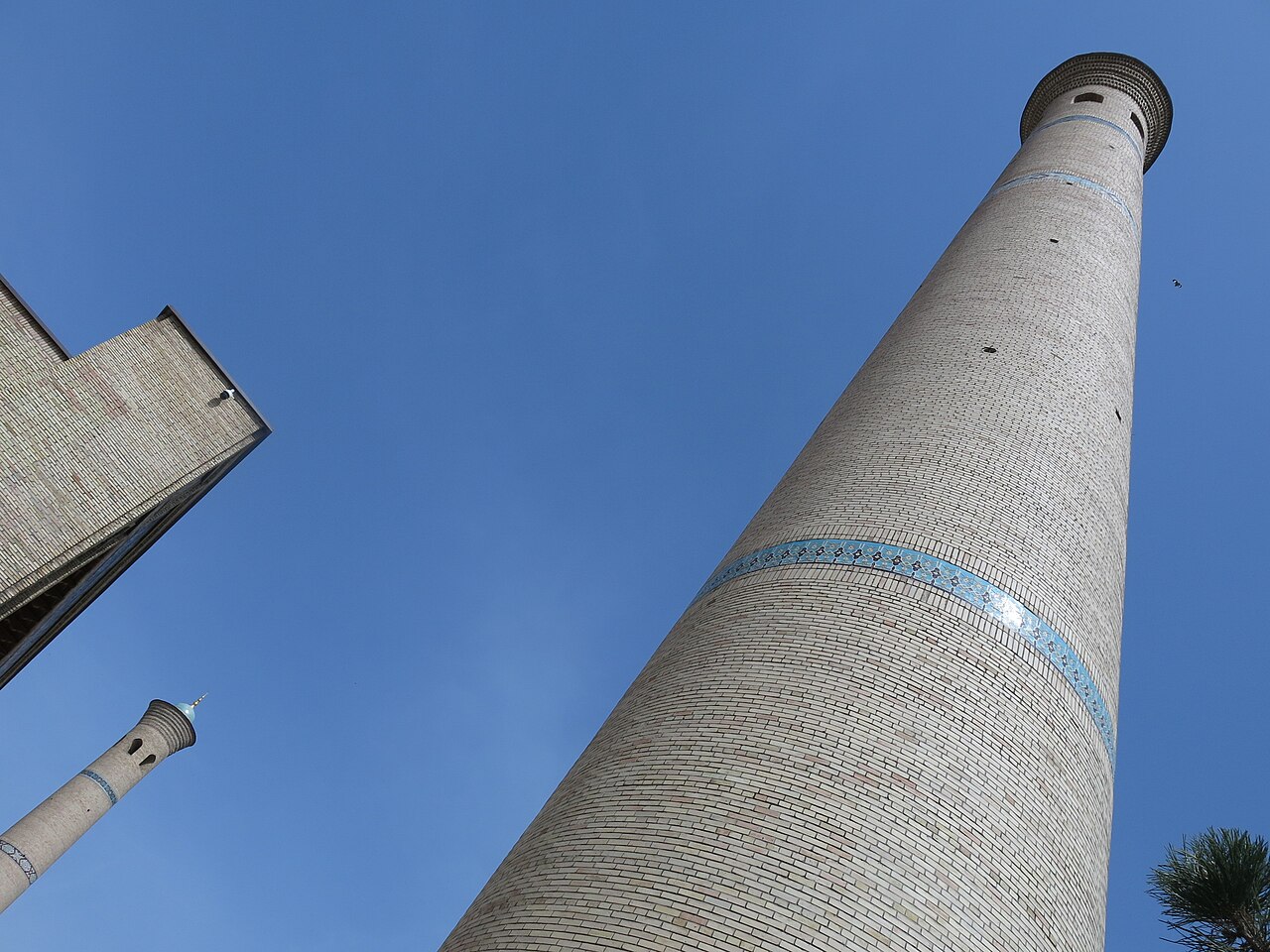
The largest building on the square is also the newest: the Hazrati Imam Friday Mosque was built in 2007 in a traditional style, with twin 53-metre minarets, turquoise domes, and a portal flanked by carved sandalwood columns. Inside, the prayer hall accommodates thousands of worshippers. Non-Muslim visitors are generally welcome outside prayer times; step in quietly, and you will find gold-leaf detailing and a calm that contrasts with the scale of the exterior. This is a working mosque first and a sight second, so behave as a guest.
Barak-Khan Madrasah
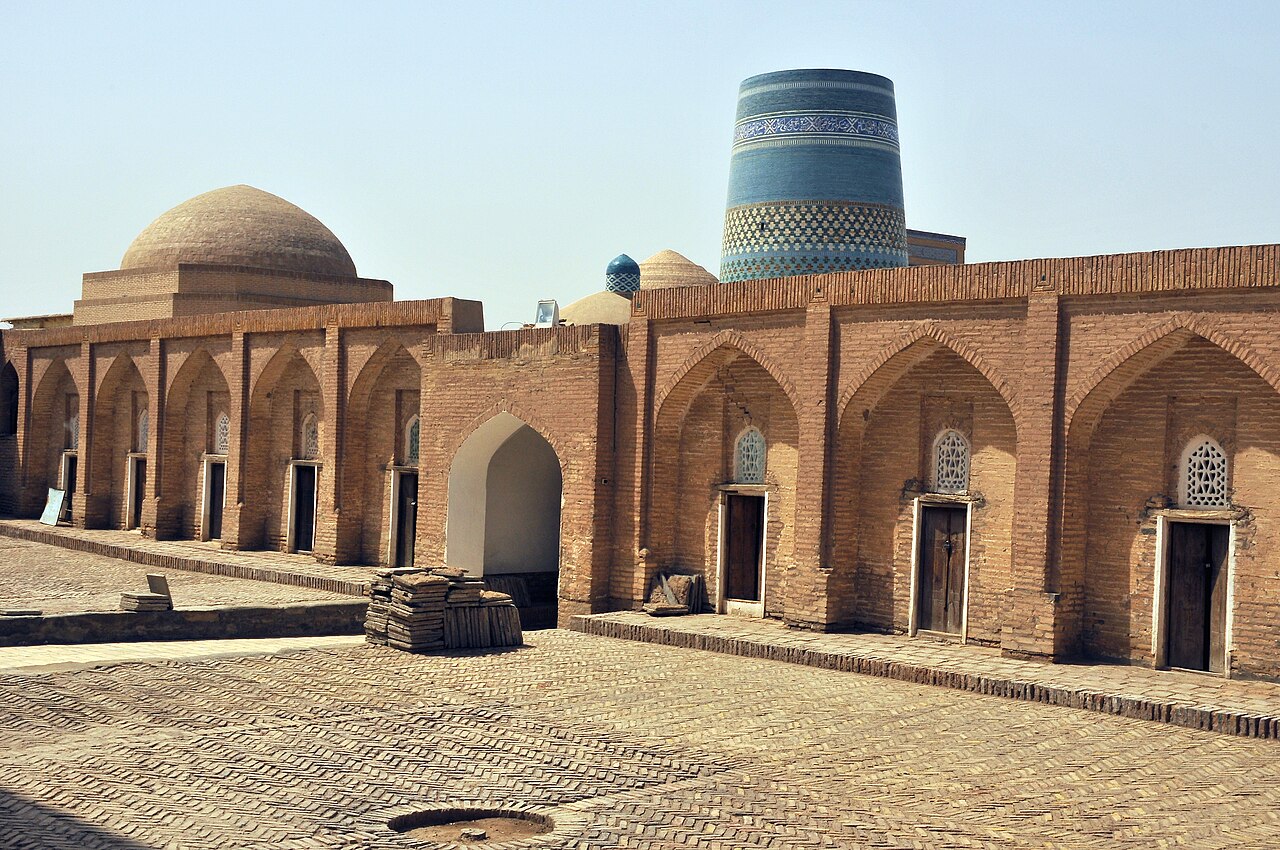
The most historically significant building on the square, the Barak-Khan Madrasah dates from the 16th century, commissioned under the Shaybanid ruler Nauruz Ahmed Khan, nicknamed Barak-Khan. Its portal carries fine glazed tilework, and the structure incorporates two earlier mausoleums, one built for Suyunij-khan, the first Shaybanid ruler of Tashkent. For much of the 20th century this was the seat of the Muslim Board of Uzbekistan. Today the student cells around its courtyard hold craft and souvenir shops — pleasant for a browse, though prices are aimed at tourists.
Tillya Sheikh Mosque
Facing the Barak-Khan Madrasah stands the Tillya Sheikh Mosque, built in 1856–57 during the Kokand Khanate era. Before the 2007 reconstruction this was the complex’s main Friday mosque, and for years it was the home of the Uthman Quran. It remains an active place of worship, with a library of rare manuscripts, an intimacy the newer buildings lack, and, reportedly — a reliquary hair of the Prophet Muhammad among its treasures.
Moyie Mubarek Library Museum (Muyi Muborak Madrasah)
The small 16th-century Muyi Muborak madrasah, the name means “sacred hair,” another reference to a relic of the Prophet — served from 2007 to 2026 as the library museum displaying the Uthman Quran alongside some 20,000 books and manuscripts, including Qurans in dozens of languages and rare miniature copies. With the great Quran now moved next door, the museum’s ongoing role and ticketing were still settling at the time of writing; the manuscript collection itself remains historically important. Check locally whether it is open before queueing (last checked: July 2026). Photography was never permitted inside, and we would expect that rule to continue wherever the collection is shown.
Mausoleum of Kaffal Shashi
The complex takes its name — “Khast Imam” derives from Hazrati Imam, “the holy imam” — from Abu Bakr Kaffal Shashi, a 10th-century Tashkent-born scholar, poet, and craftsman revered as one of the first imams to spread Islam in the region. His mausoleum, rebuilt in the 16th century, stands at the northern edge of the square and remains an active pilgrimage site. You will often see local families praying here; non-Muslims may enter respectfully, but give worshippers space and priority.
The Center of Islamic Civilization
Opened on 17 March 2026 after nearly a decade of construction, the Center of Islamic Civilization is a monumental museum, library, and research institution built beside Khast Imam, instantly the biggest draw in this corner of Tashkent. Its galleries trace Central Asia’s contribution to Islamic science, art, and scholarship, from al-Khwarizmi and Ibn Sina to Imam al-Bukhari, and the showpiece Quran Hall displays the Uthman Quran beneath an elaborate light-mapped dome. Visits are by timed ticket and typically include a guided tour of around two hours; keen museum-goers should budget half a day. Tickets are sold at the door or online through iTicket.uz. Reported adult prices for the guided excursion were around 60,000 som at opening, with differentiated pricing for Uzbek citizens, foreigners, and children — confirm current rates before you go (last checked: July 2026).
Visiting Khast Imam: Fees, Hours, and Dress Code
The complex sits in the Almazar district of the old town. The easiest approach is a short taxi (Yandex Go, usually 10,000–20,000 som from the centre) or a 20–25 minute walk north from Chorsu Bazaar. The nearest metro stations are Gafur Gulom and Chorsu, see our Tashkent metro guide for how the system works. Early morning and the hour before sunset are best for photographs; midday summer heat on the open plaza is fierce.
| Site | Typical hours | Fee (last checked: July 2026) |
|---|---|---|
| Khast Imam square and mosques | Roughly dawn to dusk; avoid Friday midday prayers | Free |
| Moyie Mubarek Library Museum | Approx. 9:00–18:00 when open; status in flux after the Quran’s move — check locally | Previously ~60,000 som for foreigners; may have changed |
| Center of Islamic Civilization | Daily; reported 9:00 until late evening, timed-entry sessions | ~60,000 som adult guided excursion; ~25,000 som children 7–17; verify current pricing |
| Barak-Khan Madrasah courtyard (shops) | Daytime, roughly 9:00–18:00 | Free to enter |
Khast Imam is a functioning religious centre, not a museum piece, so dress and conduct matter more here than at most Uzbek sights. The essentials:
- Cover shoulders and knees; for women, a headscarf is expected inside the mosques and is a respectful choice on the square itself.
- Remove shoes before entering prayer halls and the mausoleum.
- Do not photograph worshippers without permission, and skip photos entirely during prayers; interior photography of the Quran has always been forbidden.
- Keep voices low inside buildings, and avoid visiting the mosques during Friday midday prayers unless you are attending.
- Public displays of affection are out of place here even by Tashkent standards.
For a fuller grounding in local norms, greetings, mosque etiquette, tea rituals — see our guide to Uzbek culture and etiquette. None of it is difficult, but this particular square is where getting it right counts most.
Frequently Asked Questions
Is the Uthman Quran really the oldest Quran in the world?
It is one of the oldest substantially complete Quran manuscripts, and by tradition the oldest. Fragments elsewhere, notably the Birmingham and Sanaa folios — may be marginally earlier, but as a large caliphal-era codex with a documented history, the Tashkent manuscript has few rivals, as its UNESCO listing reflects.
Where exactly is the Quran displayed now?
As of its opening on 17 March 2026, the Uthman Quran is displayed in the Quran Hall of the Center of Islamic Civilization, immediately beside the Khast Imam Complex, no longer in the Moyie Mubarek Library Museum. Entry is via a ticketed, usually guided visit to the Center.
Can non-Muslims visit Khast Imam and see the Quran?
Yes. The square, the mosques outside prayer times, and the Center of Islamic Civilization are all open to visitors of any faith, provided you dress modestly and behave respectfully. The Quran Hall is treated with particular reverence, so follow your guide’s lead there.
How long should we allow for a visit?
For the Khast Imam square and its buildings alone, 1–2 hours is comfortable. Add the Center of Islamic Civilization and you should budget half a day, since the standard guided tour runs about two hours and the galleries reward lingering. Combining it with Chorsu Bazaar makes an excellent full old-town day.
Is Khast Imam worth it if we are short on time in Tashkent?
Yes — with only one sightseeing block in the capital, we would spend it here and at Chorsu Bazaar. Khast Imam and the new Center are Tashkent’s clearest claim to world-class status, and the site ranks high on our list of the best things to do in Uzbekistan.
Final Thoughts
Khast Imam has always been Tashkent’s spiritual heart; with the opening of the Center of Islamic Civilization, it is now also the country’s flagship cultural site. Come for the twin minarets and tiled portals, but stay for the sobering moment in front of a parchment book that has survived thirteen centuries, three empires, and a 3,000-kilometre journey home. Few objects anywhere carry that much history in so few pages.
Featured image: Enric (CC BY 4.0) via Wikimedia Commons.