Somewhere between the domes of Samarkand and the caravan alleys of Bukhara, the road empties out into the Kyzylkum Desert and the pace of Uzbekistan changes completely. Most travellers break the journey here with a night in a yurt camp near Lake Aydarkul, and it has quietly become one of the country’s most popular experiences. This is our honest, practical guide to what that night actually involves, from camel rides and swimming to the toilets, the food, and the campfire music, plus how to book it, what it costs, and when to go.
What a yurt stay is really like
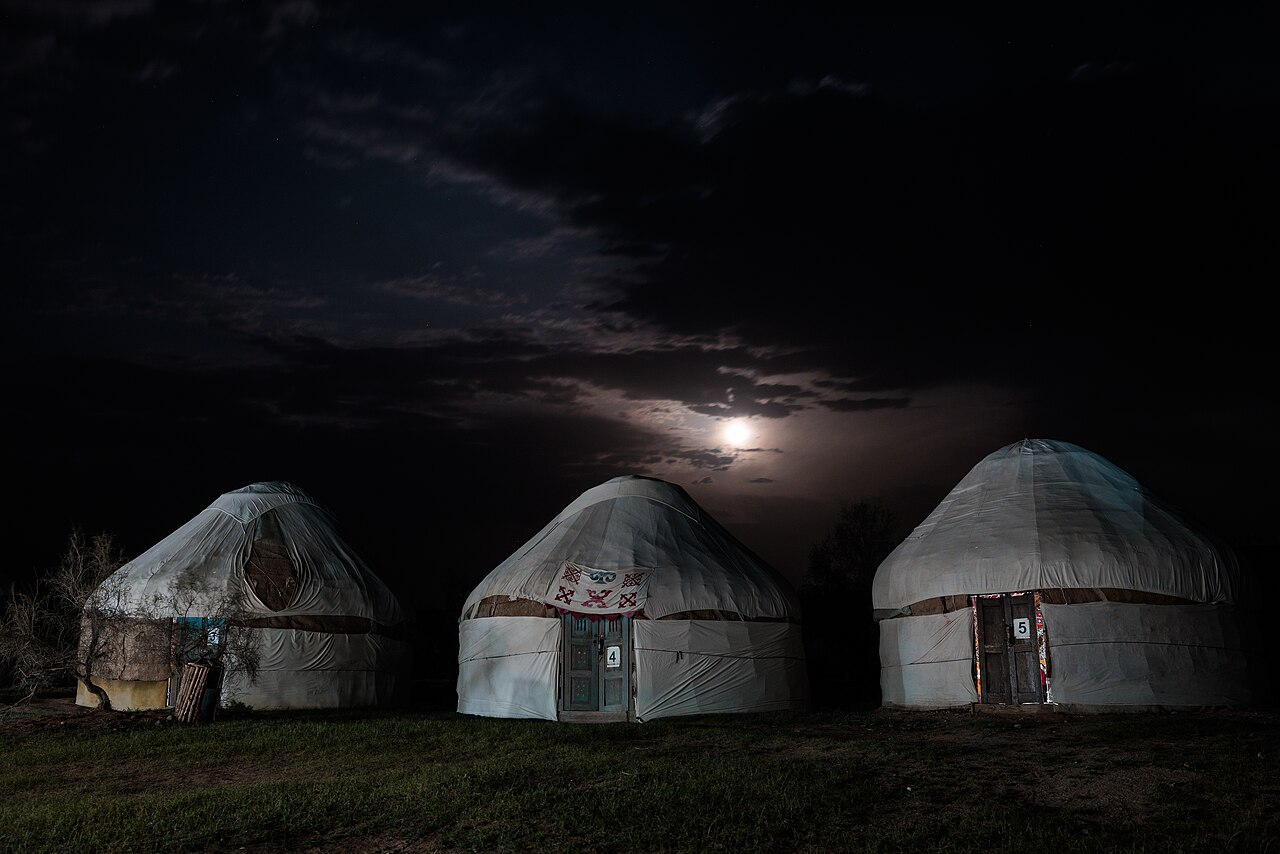
Let us set expectations honestly, because “yurt camp” means different things at different price points. These aren’t the sleek glamping pods some brochures imply. A typical camp is a cluster of round Kazakh-style felt yurts arranged around a central fire and a communal dining area, pitched on open desert scrub with the Nuratau foothills on one horizon and nothing much on the other. Inside, a yurt holds several low beds or mattresses with heavy handmade carpets and felt rugs, and most camps sleep you four to six per yurt unless you pay for private use.
Facilities and comfort
Bathrooms are shared and sit in a separate ablution block, not in your yurt. The better-run camps have hot and cold water with decent pressure and clean toilets; the more basic ones have tired sanitary blocks with unisex basins and unreliable hot water. This is the single biggest thing that varies between camps, so it’s worth checking recent reviews for the specific camp before you commit. Yurts aren’t heated by default, though most places will put a heater or extra blankets in on request, which matters in spring and autumn when desert nights turn genuinely cold. Bring a head-torch, wet wipes, and a power bank, as electricity is often limited to a few communal hours from a generator.
Food and evenings
Dinner and breakfast are usually included and served communally. Expect simple, generous home cooking: soup or plov, salads, bread, fruit, tea, and sometimes a shared meat dish such as the boiled-meat-and-noodle beshbarmak. It’s honest food rather than fine dining, and camps will do a vegetarian version if you ask when booking. The evenings are the real highlight. Once dinner clears, a local musician often sings by the fire, the sky fills with more stars than most visitors have ever seen, and the desert silence does the rest. Don’t over-plan the night; the point is to sit still.
Lake Aydarkul
Lake Aydarkul is the surprise of the trip: a vast inland sea in the middle of the desert, created almost by accident in the 1960s when overflow from the Syr Darya filled a natural depression in the Kyzylkum. Today it stretches for roughly 250 kilometres and delivers the strange, wonderful sight of turquoise water lapping against sand dunes.
Swimming and the shoreline
The water is mildly salty, calm, and swimmable through the warm months, and a dip after a dusty afternoon is one of the trip’s simple pleasures. Note that most yurt camps aren’t on the lakeshore itself; the water is often a 20 to 40 minute drive away, so a lake visit is usually a separate excursion your camp arranges rather than a stroll from your yurt. There are no lifeguards, no facilities, and no shade, so bring water, sun cover, and sandals for the occasionally muddy entry. Fishermen work the lake, and grilled fresh fish sometimes appears at camps nearby. If swimming matters to you, confirm the lake trip is included before booking, as some cheaper packages skip it.
Camel trekking in the Kyzylkum
A camel ride is the postcard image of Aydarkul, and nearly every camp offers one. The standard version is a gentle 60 to 90 minute plod over the dunes on a Bactrian (two-humped) camel led by a handler, usually timed for the softer light of late afternoon or sunrise. It’s touristy, yes, but genuinely lovely at golden hour and suitable for complete beginners; you don’t need any riding experience.
Short rides versus longer treks
Many camps fold a short ride into their overnight rate, while a few charge a small extra fee of roughly 5 to 20 US dollars per person. If you want more than a photo opportunity, ask about a longer half-day trek out toward the lake, which several camps run with a cameleer for around 40 to 50 US dollars per person. Multi-day camel safaris are also possible for the committed. Be honest with yourself about comfort, though: even 90 minutes on a camel is hard on the legs and lower back, so a longer trek is a real commitment rather than a casual add-on.
Nurata and the Nuratau villages
The town of Nurata (Nurota) is the gateway to the whole region and worth an hour or two on the way in. It sits right on the line where the Nuratau Mountains meet the Kyzylkum, and it packs a surprising amount of history into a small, dusty grid of streets.
Chashma spring and the fortress
The heart of town is the Chashma complex, a revered pilgrimage site built around a sacred spring said to hold holy fish that visitors are asked not to catch. The complex includes a Friday mosque, a domed prayer hall, a bathhouse, and a small museum, and it’s an active place of worship, so dress modestly and be respectful of pilgrims. On the hill above sits the ruined fortress of Nur, popularly linked to Alexander the Great; little remains but crumbling ramparts, though the climb rewards you with a fine view over the town and the desert edge.
Petroglyphs and Sentob village
Deeper into the Nuratau range, the Sarmysh Gorge holds a remarkable open-air gallery of thousands of petroglyphs, prehistoric rock carvings of hunters, ibex, and everyday scenes etched into black basalt. It’s a detour that suits travellers with extra time and their own transport. The nearby mountain villages, above all Sentob (Sentyab), offer a gentler, greener alternative to the desert camps. Sentob has been recognised as one of the world’s best tourist villages and runs family homestays, walnut orchards, and hiking trails; staying here trades desert dunes and camels for cool streams, mountain air, and a stronger sense of everyday village life. Many travellers combine a night in the desert with a night in the mountains for the contrast.
How to book and get there
The camps sit roughly midway between Samarkand and Bukhara, which is exactly why they work so well as an overnight break on the journey between the two. From the camps it’s about 250 to 270 kilometres and around five hours’ drive to either city, with the route from Bukhara typically passing through the pottery town of Gijduvan and then Nurata.
Booking options
- Direct with the camp: Many camps take bookings by phone, email, or booking platforms, and will arrange transfers for an added fee. This is often the cheapest route if you’re comfortable coordinating logistics yourself.
- A tour operator or agency: Countless Samarkand- and Bukhara-based agencies sell one-night packages that bundle transport, the camp, meals, a camel ride, and the lake. This is the simplest option and what most first-time visitors choose.
- Private driver: If you’re already hiring a car for the Samarkand-to-Bukhara leg, many drivers will happily detour to a camp and wait overnight, letting you set your own pace.
Public transport doesn’t reach the camps, so you’ll need either a package, a private transfer, or your own driver. Because the experience varies so much between camps, we would prioritise recent, specific reviews over headline price. For where this fits in a wider trip, see our 10-day Uzbekistan itinerary and our overview of where to stay in Uzbekistan. The independent travel resource Caravanistan is also a reliable place to compare camps and homestays.
When to go
Season matters more here than almost anywhere else in the country. Most desert camps close from around November to mid-March, when nights are bitterly cold, and some also pause during the fiercest weeks of July and August, when midday heat becomes punishing. That leaves two clear sweet spots: April to June and September to October, when days are warm, nights are cool but bearable, and the lake is comfortable for swimming. Spring adds green to the Nuratau foothills; autumn brings softer light and calmer heat. If you can only travel in high summer, go, but pick a camp with reliable shade and water and plan activities for early morning and evening. For the wider picture, see our guide to the best time to visit Uzbekistan. (last checked: July 2026)
Costs at a glance
Prices vary by camp comfort level and whether you book direct or through an agency, but these ranges are a fair guide for 2026. (last checked: July 2026)
| Item | Typical 2026 cost | Notes |
|---|---|---|
| Yurt bed, dinner & breakfast | US$30–45 per person | Shared yurt; more for private use or higher-comfort camps |
| Short camel ride (60–90 min) | US$5–20 per person | Sometimes included in the overnight rate |
| Longer camel trek (half day) | US$40–50 per person | With cameleer, often out toward the lake |
| Private transfer (one way) | US$60–120 per car | From Samarkand or Bukhara; sedan or van |
| All-in agency package (1 night) | US$70–150 per person | Transport, camp, meals, camel ride, lake |
Frequently Asked Questions
Is one night at a yurt camp enough?
For most travellers, yes. A single night breaks up the long Samarkand-to-Bukhara drive, fits in a camel ride, the lake, a campfire evening, and a Nurata stop, and captures the essence of the experience. Add a second night, ideally in a Nuratau mountain village such as Sentob, only if you want proper hiking and a slower, more immersive stay.
Are the yurt camps suitable for families or older travellers?
They can be, with the right expectations. Children usually love the camels, the fire, and the open space, and camel rides are gentle and handler-led. The main hurdles are the shared, basic bathrooms and the cold nights in spring and autumn. Choose a higher-comfort camp, request extra blankets or a heater, and the trip works well for most ages.
Can I visit Aydarkul as a day trip instead of staying overnight?
Day trips exist, usually branded as “one day as nomads,” and they include a camel ride, lunch, and the lake without the overnight. They save time but miss the best part: the desert after dark, the stars, and the campfire music. If your schedule allows, we think the overnight is well worth it.
Is the water at Lake Aydarkul safe and clean for swimming?
Generally yes. The lake is mildly salty and calm, and locals and visitors swim through the warm months. There are no facilities, lifeguards, or shade, and the entry can be muddy, so bring water shoes, sun protection, and your own drinking water. Supervise children closely, as there’s no supervision on site.
What should I pack for a night in the desert?
Layers are key: light clothing for hot days and a warm layer for cold nights. Bring a head-torch, a power bank, wet wipes or hand sanitiser, sun protection, swimwear and water shoes for the lake, any medication you need, and some cash, as card payment isn’t reliable out here. Modest clothing is useful for visiting the Chashma pilgrimage site in Nurata.
Where does a yurt stay fit into a wider Uzbekistan trip?
It slots naturally between the two great Silk Road cities. Spend a few days in Samarkand, break the westward journey with a night at Aydarkul, then continue to Bukhara. It’s one of the most rewarding entries on any list of the best things to do in Uzbekistan.
Final thoughts
A yurt night at Aydarkul isn’t luxury, and it’s not meant to be. The bathrooms are shared, the beds are simple, and the food is honest rather than refined. What you’re buying is a change of pace: a camel plodding over the dunes at sunset, a swim in an improbable desert lake, and a fire under a sky thick with stars while someone sings in a language you don’t need to understand. Manage your expectations, pick your camp carefully, go in spring or autumn, and it becomes one of the moments from Uzbekistan you remember longest.
Featured image: Carsten Siegel (CC BY-SA 4.0) via Wikimedia Commons.