Uzbekistan has quietly become one of the most rewarding places in the world to travel alone as a woman. It is welcoming, deeply hospitable, and genuinely safe in a day-to-day sense, yet it still feels off the beaten track enough that many women arrive unsure of what to expect. This guide answers the practical questions honestly: how safe it really is, what to wear, how to handle taxis and homestays, and how to read the warm-but-unfamiliar social cues you will encounter. For the country’s general safety picture, pair this with our wider guide on whether Uzbekistan is safe; here we focus on the experience specific to women traveling on their own.
How safe is Uzbekistan for solo female travelers?
The short answer is: reassuringly safe, and increasingly recognized as such. As of 2026 Uzbekistan has ranked at or near the top of several international solo-female-travel safety indices, and the firsthand consensus from women who have traveled there recently is strongly positive (last checked: July 2026). Violent crime against tourists is rare, and the most common accounts describe feeling comfortable walking alone through cities during the day and, in the well-lit central districts of Tashkent, Samarkand, and Bukhara, into the evening.
The honest picture on harassment
Being honest matters more than being reassuring, so here is the nuance. Street harassment is not entirely absent, but it is markedly less common than in many popular European destinations. Many women report zero catcalling across a whole trip; others note one or two mild incidents over several weeks. Staring can happen, especially in smaller towns where foreign visitors are still a novelty, but it usually reads as curiosity rather than menace. The overwhelming pattern is one of courtesy. This should not make you complacent, but it should let you relax: the baseline is respectful.
Check your own government’s advisory
Safety indices and traveler blogs are useful, but always cross-check your own country’s official travel advisory before you go, since it reflects your nationality’s consular support and any current localized cautions. The US State Department, the UK Foreign, Commonwealth and Development Office, and Australia’s Smartraveller all publish country pages for Uzbekistan that are updated as conditions change. Register with your embassy if your country offers that service.
What to wear: dress considerations
Uzbekistan is a Muslim-majority country, but its dress norms are more relaxed than most first-time visitors expect. You do not need to cover your hair anywhere except when entering an active mosque or shrine, and even then a light scarf over the head and shoulders is enough. Local women in cities dress in a wide range of styles, from traditional to thoroughly modern, so you will not stand out for dressing normally.
A simple, comfortable approach
The easiest rule of thumb is modest and comfortable. Clothes that cover the shoulders and knees will take you into any mosque, madrasa, or bazaar without friction, and loose fabrics are far kinder in the summer heat. Practical staples include:
- Loose trousers or a maxi skirt that breathe in hot weather
- Tops that cover the shoulders, in light, breathable fabrics
- A large lightweight scarf, which doubles as a head covering for mosques and sun protection at exposed sites
- Comfortable walking shoes you can slip off easily, since you will remove them at religious sites and in many homes
Big cities are liberal enough that a T-shirt and cropped trousers raise no eyebrows, while smaller towns and villages in the Fergana Valley and rural south are more conservative, so lean modest when you head off the tourist trail. For a full climate-based checklist, see our Uzbekistan packing list, and for the deeper reasoning behind local customs, our guide to Uzbek culture and etiquette.
Transport and taxi safety
Getting around is one of the easiest parts of solo travel here, and the modern options remove most of the guesswork. The high-speed Afrosiyob train linking Tashkent, Samarkand, and Bukhara is clean, punctual, and safe at all hours; compartments are shared but orderly, and traveling by rail between the headline cities is a comfortable, stress-free default. Our overview of getting around Uzbekistan covers routes and booking in detail.
Use a ride-hailing app for city taxis
Uber does not operate in Uzbekistan; the standard app is Yandex Go, which works in Tashkent, Samarkand, Bukhara, and other major cities. It shows a fixed price before you confirm, tracks your route, and records the driver and plate, which removes both the safety uncertainty and the haggling. A short city ride in Tashkent typically costs only a couple of dollars (last checked: July 2026). A few simple habits make it even smoother:
- Check that the car model, plate number, and driver name in the app match before you get in
- Sit in the back seat and share your live route with a friend or your accommodation
- If the pickup point or route looks wrong, cancel and rebook from a clearer, busier spot
Airport touts and shared taxis
The most frequently reported hassle in the country is overcharging by unofficial drivers at Tashkent airport, who may quote foreign arrivals several times the real fare. Walk past the touts inside the terminal and book a Yandex Go from the pickup area instead. In smaller cities such as Samarkand, yellow shared taxis are a common way to move around; flag one that already has passengers, agree the price before you set off, and you will rarely have a problem.
Accommodation
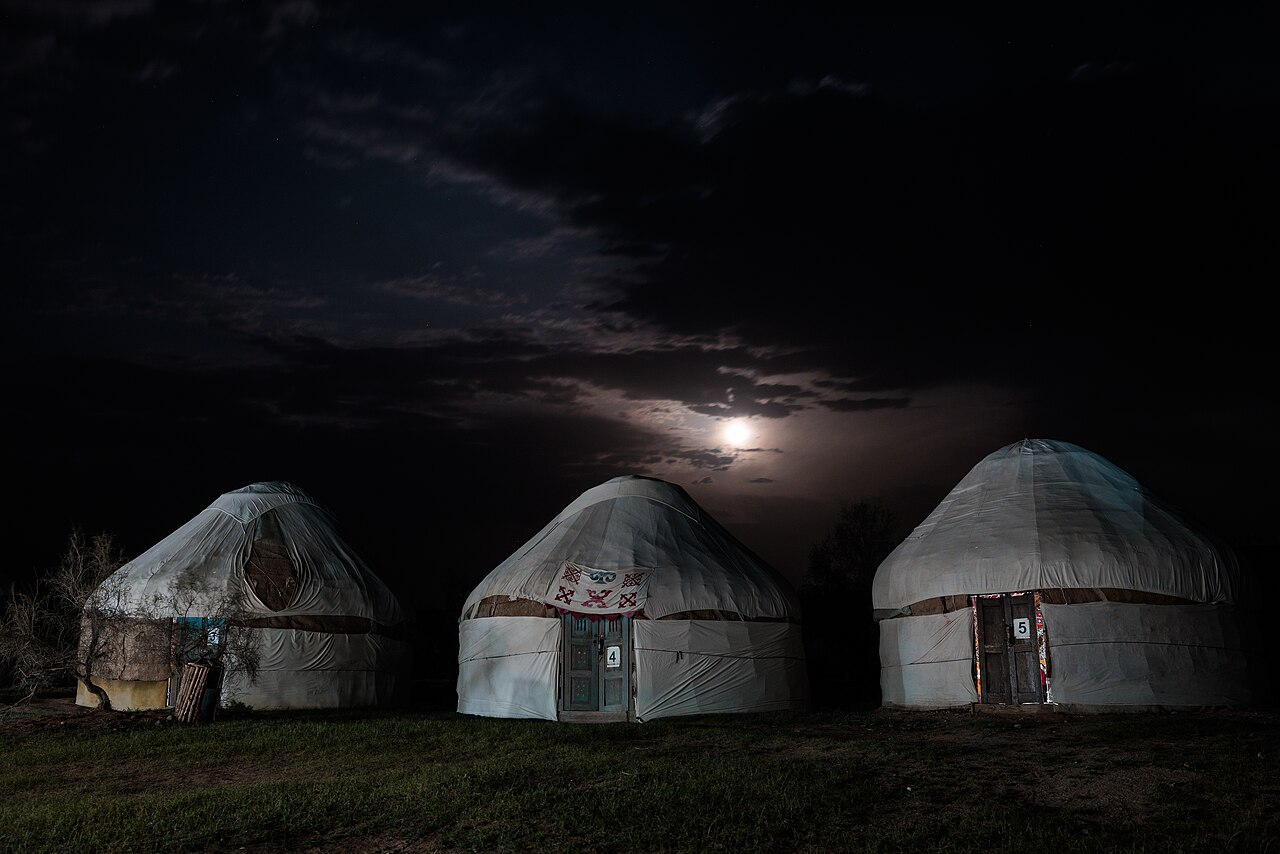
Uzbekistan’s accommodation scene suits solo women well, ranging from professional boutique hotels in restored merchant houses to warm family-run guesthouses. Family homestays and small B&Bs are among the highlights of the trip, offering home-cooked breakfasts, local knowledge, and hosts who often go out of their way to help a lone traveler feel looked after. Bukhara and Khiva in particular have atmospheric guesthouses inside their old towns.
A note on registration
Uzbekistan requires tourists to have their stays registered; licensed hotels and guesthouses do this for you automatically and give you a small registration slip. Keep these slips together in one place, as they can be requested when you leave the country. This is one practical reason to favor registered accommodation, and it is worth confirming a place handles registration when you book. Our guide to where to stay in Uzbekistan breaks down the best areas and property types city by city.
Interacting with locals and hospitality
Hospitality is central to Uzbek culture, and as a solo woman you are likely to be on the receiving end of a great deal of it. Expect to be offered tea, invited to sit, and sometimes waved over to share food at a family celebration. These gestures are genuine and worth accepting when you can; they are among the most memorable parts of traveling here. A little openness goes a long way, and the goodwill you meet quickly dissolves any first-day nerves.
Reading intentions and setting boundaries
Almost all attention you receive will be simple curiosity and friendliness. On the rare occasion an interaction feels off, the tools you would use anywhere apply: a firm, polite decline, moving toward a busy public space, or stepping into a shop or cafe. Uzbek social norms are fairly formal, so a clear “no” is respected. Married or not, mentioning a husband who is “joining you later” is a common, low-friction way to close down persistent questions if you ever want one.
The hammam: a women’s-only highlight
One experience worth seeking out is a traditional hammam, or bathhouse. Bukhara has a centuries-old women’s hammam near the Kalyan Minaret where, over the course of an hour or so, you sweat in a warm chamber, are scrubbed with a silk mitt, and receive a soapy massage and ginger treatment, often for around twenty dollars (last checked: July 2026). It is usually filled only with local women, making it both a deeply relaxing break from sightseeing and a quietly authentic cultural window. Check current opening days locally, as some close one day a week.
Practical tips and useful phrases
A few small preparations make solo days run smoothly:
- Carry cash in small notes; card acceptance is growing but uneven outside big hotels and restaurants
- Buy a local eSIM or SIM on arrival so you always have data for maps and Yandex Go
- Save your accommodation’s name and address in Cyrillic to show drivers
- Keep photos of your passport, visa, and registration slips on your phone
- Trust the same instincts you would use anywhere; they rarely need to fire here, but they are always worth having
A handful of words in Uzbek or Russian earns instant warmth. Russian is widely understood alongside Uzbek:
| English | Uzbek | Russian |
|---|---|---|
| Hello | Salom | Zdravstvuyte |
| Thank you | Rahmat | Spasibo |
| No, thank you | Yo’q, rahmat | Net, spasibo |
| How much? | Qancha? | Skolko? |
| Where is…? | …qayerda? | Gde…? |
Frequently Asked Questions
Is it safe to walk alone at night in Uzbekistan?
In the central, well-lit districts of Tashkent, Samarkand, Bukhara, and Khiva, women commonly report feeling comfortable walking in the evening. As anywhere, stick to busier streets, avoid poorly lit or deserted areas late at night, and take a Yandex Go if you are unsure of the route back.
Do I have to cover my hair?
No, not in everyday settings. Uzbekistan does not require women to cover their hair in public. The only time you will want a scarf handy is when entering an active mosque or shrine, where covering your head and shoulders is a sign of respect.
Is Uzbekistan good for first-time solo travelers?
Yes. Low crime, easy train connections between the main sights, app-based taxis, and a strong culture of hospitality make it a gentle introduction to solo travel, even if it feels adventurous on paper. The main cities are well set up for independent visitors.
How do I handle unwanted attention?
It is uncommon, but a firm, polite decline usually ends it, since social norms here are formal and a clear “no” is respected. Move toward a busy area or into a shop or cafe if you want space, and referring to a husband joining you later is a simple way to deflect persistent questions.
Can women visit the hammams alone?
Yes. Traditional bathhouses have women’s sessions or separate women’s hammams, and going alone is completely normal. Bukhara’s women’s hammam is a popular, affordable choice attended mostly by local women. Confirm the current opening days in person, as schedules vary.
Should I book a tour or travel independently?
Either works. Independent travel is straightforward thanks to trains and ride-hailing apps, and many women do the classic Tashkent-Samarkand-Bukhara-Khiva route entirely on their own. If you prefer company or want to reach remote areas such as the Aral Sea region, a small-group or private tour is a comfortable option.
The bottom line
Uzbekistan rewards the woman who travels it alone with turquoise-domed cities, generous hosts, and days that unfold with remarkably little friction. Dress modestly, lean on the trains and Yandex Go, choose registered accommodation, and stay alert in the ordinary ways, and the country tends to give back far more warmth than caution. Pack a scarf, learn a word or two of Uzbek, and go.
Featured image: Petar Milošević (CC BY-SA 4.0) via Wikimedia Commons.