Uzbekistan is one of the most rewarding shopping countries in the world, and we mean that as more than a cliché. The Silk Road did not just pass through here; it settled, put down roots, and turned whole towns into single-craft specialists. Margilan weaves silk. Rishtan glazes it blue. Chust forges knives. Bukhara stitches gold. If you know what each place is famous for, a souvenir run becomes a route through Uzbek culture rather than a scramble for fridge magnets. Below we cover the buys worth your suitcase space, exactly where to find each one, how to bargain without being rude, and the export rules that catch travellers out at the airport.
Ikat & Adras Silk (Margilan)
Ikat — abrbandi in Uzbek, meaning “cloud binding” — is the country’s signature textile: threads are tie-dyed before weaving so the pattern emerges blurred and luminous, like colour seen through water. Pure silk ikat is called atlas; the cheaper, sturdier silk-and-cotton blend is adras. Margilan in the Fergana Valley is the heart of it, and the Yodgorlik Silk Factory there still does the whole process by hand, from boiling cocoons to hand-looming bolts. You can watch the work and buy at the source.
Buy scarves, bolts of cloth, robes (chapan), cushion covers or a tailored jacket. If you can’t reach Margilan, ikat is sold everywhere in Samarkand and Bukhara too — just check the label, since a lot of what’s sold as “silk” is actually adras or straight synthetic. Rub it, and if a vendor lets you, the burn test is definitive: real silk smells of singed hair and leaves ash, not a hard plastic bead.
Suzani Embroidery
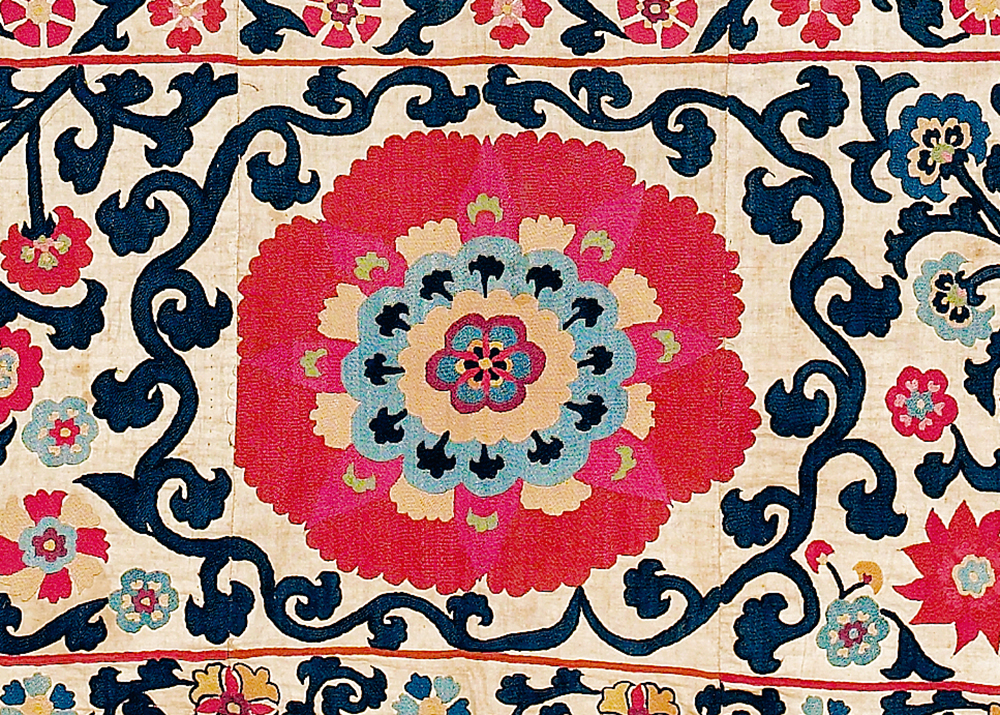
Suzani (from the Persian suzan, needle) is the large decorative embroidered textile traditionally stitched by a bride and her female relatives for her dowry. Sun discs, pomegranates, tulips and vines cover the cloth in chain and couching stitches, each motif carrying a wish for fertility, protection or good fortune. Antique dowry pieces are museum-grade; what most travellers buy today are new panels, cushion covers, bags and table runners worked in the same vocabulary.
The honest distinction to ask about is hand-embroidered versus machine-embroidered. Handwork has slight irregularities, a slightly raised texture, and visible (if neat) threads on the reverse; machine work is flat and mechanically perfect. Hand suzani costs several times more and is worth it. Shakhrisabz and Bukhara are especially known for the craft, though you’ll find good pieces in every tourist bazaar.
Rishtan Blue Ceramics
Rishtan, another Fergana Valley town, produces Uzbekistan’s most recognisable pottery, plates, bowls and tiles in a turquoise-and-cobalt palette. The colour comes from ishkor, an alkaline glaze made from local mountain plants and minerals that gives Rishtan work a depth of blue you won’t see elsewhere. The clay is dug locally too, so the whole object is genuinely of the place.
Buy a wall plate (lagan), a set of soup bowls (kosa) or a teapot. Serious buyers visit workshops in Rishtan itself, where the Usto Rustam and Ceramics Center studios sell directly. Elsewhere, Rishtan ware fills souvenir shops nationwide. Ceramics are among the safest things to buy from an export standpoint (more on that below), but they are fragile — ask the vendor to bubble-wrap generously and carry the heaviest pieces as hand luggage.
Chust Knives (Pichok)
The pichok (also spelled pichak or pchak) is the traditional hand-forged Uzbek knife, with a curved blade and a decorated handle of horn, wood or plastic inlay. The towns of Chust and Shakhrikhan in the Fergana Valley are the forging centres, and a good pichok is both a working kitchen tool and a genuine piece of craft. Look for the maker’s stamp and a blade that’s been properly hardened rather than a soft stamped copy.
One firm practical warning: never carry a knife in your cabin bag. It must go in checked luggage, and even then it’s worth confirming your airline and transit countries allow it. Some travellers post larger blades home rather than risk an airport confiscation.
Doppa / Tubeteika Hats
The doppa (or tubeteika) is the embroidered skullcap worn across Central Asia. It’s cheap, light, packable and instantly recognisable, the best small gift in the country. The classic is the black-and-white Chust style, with four white almond (qalampir, chilli-pepper) motifs on a black ground, but colours and patterns historically signalled region, gender and marital status. Women’s caps are often fully covered in bright floral silk thread.
Gold-Thread Embroidery (Bukhara)
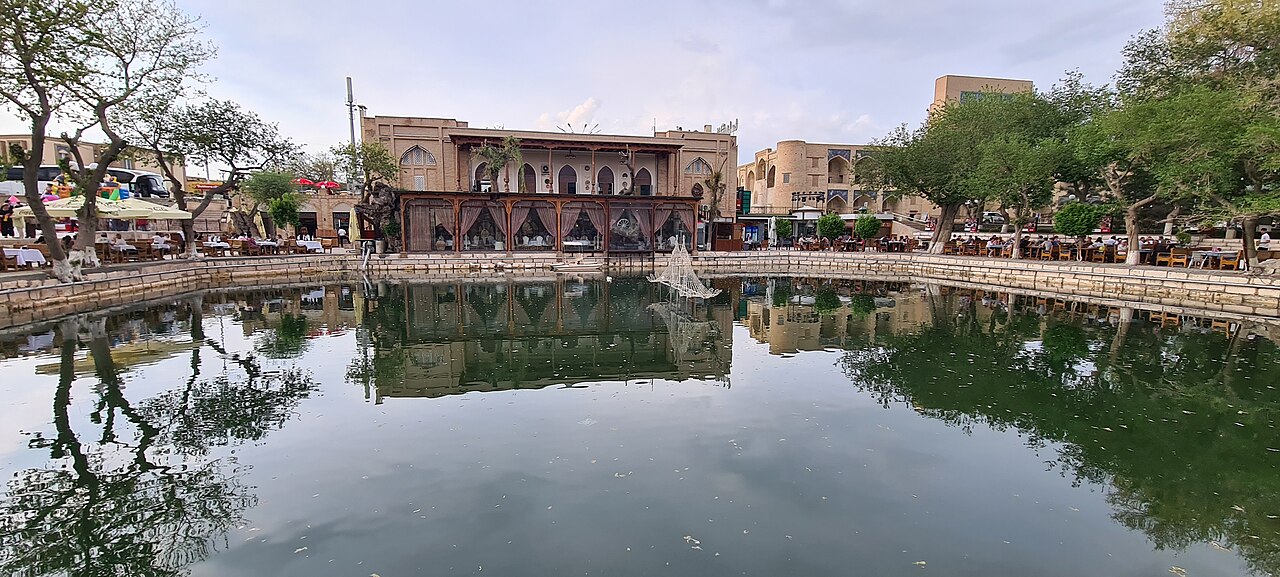
Goldwork embroidery — zardozi — is Bukhara’s speciality, a court craft that peaked under the Bukharan emirs, who dressed their aristocracy in robes and skullcaps stitched in metallic gold thread. Today the workshops around Bukhara’s old town produce gold-embroidered slippers, purses, waistcoats, caps and framed panels. It’s opulent, unmistakably Bukharan, and a step up in price from ordinary embroidery. Buy it where it’s made — the Lyabi-Hauz and Toqi trading-dome area is full of reputable ateliers.
Carpets & Miniature Paintings
Uzbek and Bukhara-style carpets and silk rugs are a major buy, sold most visibly at Bukhara’s carpet showrooms and the UNESCO-supported Bukhara Silk Carpets workshop. Hand-knotted silk pieces are an investment; machine-made and wool floor rugs are far cheaper. Miniature paintings, fine, jewel-toned scenes on paper, silk or papier-mâché in the Persian-influenced tradition — are a Samarkand and Bukhara staple and pack flat. For carpets specifically, keep reading: the export rules matter.
Spices & Dried Fruit
The edible souvenirs are gloriously cheap and every food market has them heaped in pyramids: dried apricots, raisins, walnuts, almonds, pistachios, saffron, cumin, paprika and dried herbs. Samarkand’s Siyob Bazaar (beside the Bibi-Khanym Mosque) and Tashkent’s Chorsu Bazaar under its blue dome are the classic hunting grounds, and vendors will happily let you taste before you buy. Check your home country’s rules on importing nuts, seeds and plant products before you load up, some are restricted.
Where to Buy Each Souvenir
| Souvenir | Best city / region | Where specifically |
|---|---|---|
| Ikat & adras silk | Margilan (Fergana Valley) | Yodgorlik Silk Factory, Kumtepa Bazaar |
| Suzani embroidery | Bukhara, Shakhrisabz | Trading domes, artisan workshops |
| Rishtan ceramics | Rishtan (Fergana Valley) | Ceramics workshops; shops nationwide |
| Chust knives (pichok) | Chust / Shakhrikhan | Forges; Chorsu Bazaar, Tashkent |
| Doppa / tubeteika hats | Everywhere | Any bazaar; Chorsu, Siyob |
| Gold-thread (zardozi) | Bukhara | Toqi domes, Lyabi-Hauz ateliers |
| Carpets & miniatures | Bukhara, Samarkand | Carpet showrooms, artisan shops |
| Spices & dried fruit | Samarkand, Tashkent | Siyob Bazaar, Chorsu Bazaar |
Bargaining & Export Tips
Bargaining is expected on souvenirs, textiles and larger purchases, though everyday food and fixed-price shops are not negotiable. Keep it good-humoured: it’s a friendly exchange, not a battle. Our rough approach:
- Open at roughly 50–60% of the first asking price and settle somewhere in the middle.
- Carry plenty of small-denomination som — cash is king in bazaars, and card is rarely accepted at stalls.
- Shop in the morning for the best selection, and step a street away from the big monuments where prices drop and quality often rises.
- Buy multiple items from one seller for a better rate, and always smile, chat and accept the tea if it’s offered.
Now the part travellers underestimate: export rules on antiques. It is illegal to take cultural property more than 50 years old out of Uzbekistan without a permit from the Ministry of Culture. That covers old carpets, antique suzani, historic manuscripts, coins and similar items. Anything genuinely antique needs an official certificate confirming its age and origin, and carpets and artworks approved for export are physically sealed or stamped, with paperwork you present at customs. Without it, customs can seize the item and impose serious fines (last checked: July 2026). See the U.S. government’s Uzbekistan customs guide and the note on U.S. import restrictions on Uzbek cultural material for the current picture.
The good news: newly made, mass-produced souvenirs, modern ceramics, new machine- or hand-made textiles, current-production carpets and embroidery — are generally exempt and travel freely. The practical rule is simple: buy new, keep your receipt, and if a vendor tells you something is “genuinely antique,” take that as a reason to ask for export paperwork, not just a selling point.
Frequently Asked Questions
How do I tell real silk ikat from a synthetic copy?
Real silk feels warm and slightly uneven, drapes softly, and (with the vendor’s permission) passes the burn test, it smells of burnt hair and crumbles to ash, while synthetics melt into a hard bead and smell of plastic. Genuine hand-woven ikat also shows tiny blur and imperfection in the pattern. If the price seems too low for “pure silk,” it’s almost certainly adras (silk-cotton) or synthetic — both fine to buy, just pay the right price.
Can I take a chust knife home on the plane?
Only in checked luggage, never in your cabin bag, where it will be confiscated at security. Wrap it well, declare it if asked, and check that your airline and any transit-country rules permit it. For larger or decorative blades, some travellers prefer to ship them home to avoid any airport uncertainty.
Is bargaining rude in Uzbekistan?
Not at all — for souvenirs and textiles it’s expected and part of the fun. Stay friendly and unhurried; a smile and a bit of small talk get you further than hard tactics. Food staples and fixed-price stores, however, are not negotiable, so save your haggling for the craft stalls. Our Uzbek culture and etiquette guide has more on getting the tone right.
Do I need a certificate to export a carpet?
Only if it’s genuinely antique, more than 50 years old — in which case you need a Ministry of Culture permit and the carpet must be sealed and certified for export. New, current-production carpets and rugs are generally exempt and leave the country without special paperwork. When in doubt, ask the seller directly and keep your receipt showing the item is newly made.
What’s the single best-value souvenir?
For pure value and packability, a doppa hat or a silk ikat scarf is hard to beat, light, cheap, unmistakably Uzbek, and easy to buy several of as gifts. Dried apricots and nuts are the cheapest edible option (mind your home country’s import rules). If you want one showpiece, a Rishtan ceramic plate or a hand-embroidered suzani cushion cover carries the most craft per dollar. See how these fit your budget in our Uzbekistan travel costs guide.
Where is the best all-round place to shop?
Bukhara’s old-town trading domes concentrate the widest range — silk, suzani, carpets, gold thread and miniatures, in one walkable area. For crafts at the source, the Fergana Valley (Margilan, Rishtan, Chust) is unbeatable, and Samarkand’s Siyob Bazaar mixes food and souvenirs. Fold a shopping stop into your wider itinerary using our best things to do in Uzbekistan guide.
Shop with a little knowledge and Uzbekistan rewards you twice — once with a beautiful object, and again with the story of the town that made it. Buy new, bargain kindly, keep your receipts, and leave the genuine antiques for the museums. Your suitcase will come home heavier and far more interesting.
Featured image: Unknown Shahrisyabz artisans. Photo by auctioneer (Public domain) via Wikimedia Commons.