Ask an Uzbek what one dish sums up their country and the answer is nearly always the same: plov. Known locally as osh, it’s a rice pilaf built on lamb or beef, carrots, onions and a generous slick of oil, cooked in a wide cast-iron cauldron and served to celebrate almost everything that matters. Plov turns up at weddings, births, funerals, business deals and lazy weekend lunches. It’s on the UNESCO list of Intangible Cultural Heritage, and it’s genuinely different from town to town. This guide covers what plov actually is, how the regional styles diverge, how it’s made, the plov-centre culture that gives it a public stage, where to eat the best of it, and how to behave at the table. For the wider picture, see our Uzbek food guide.
What Is Plov, Exactly?
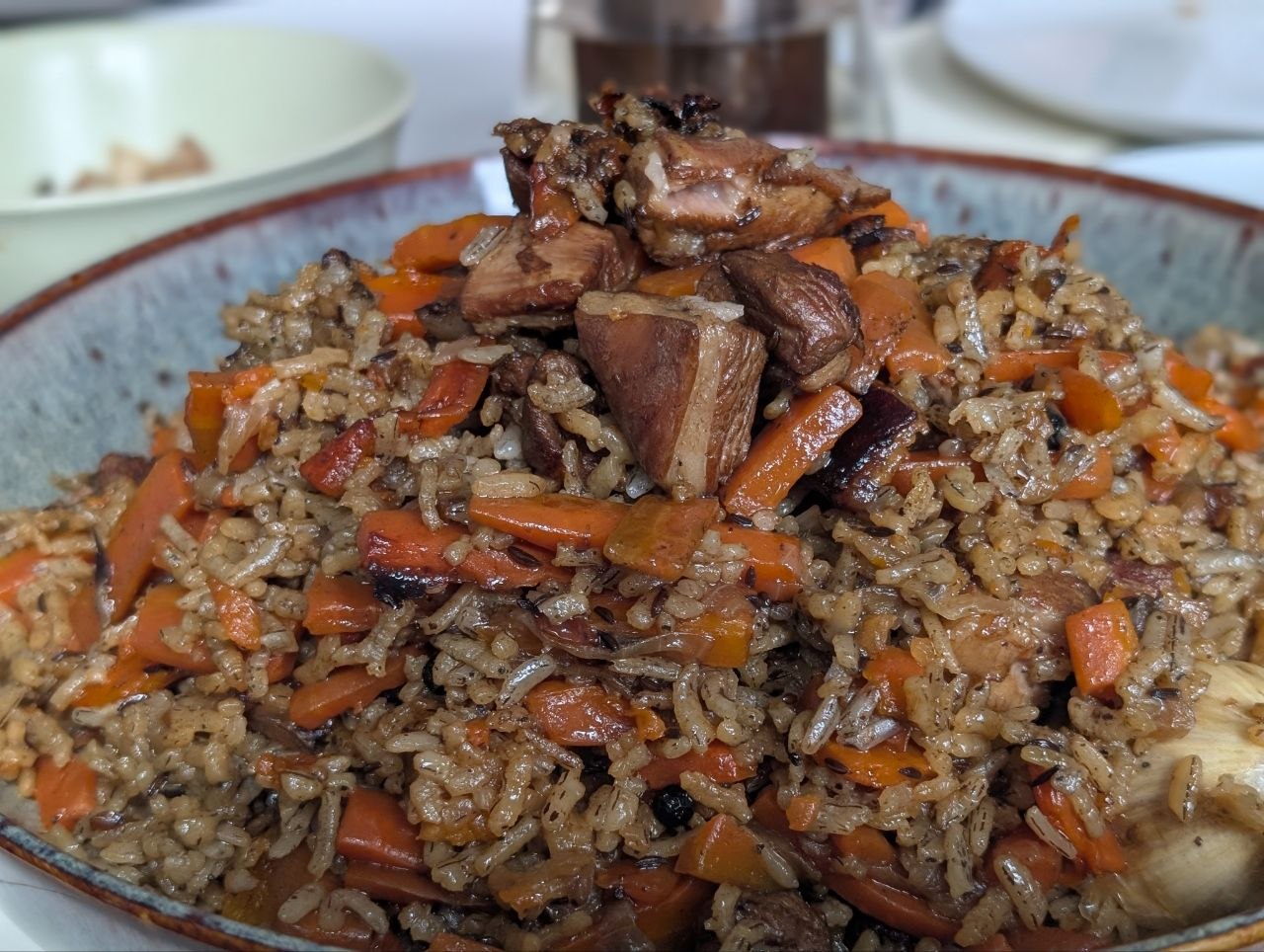
At its core, plov is rice cooked in a seasoned broth until every grain is separate, glossy and loaded with flavour. The foundation is the zirvak: chunks of meat seared in hot oil or rendered fat, then onions and long batons of carrot softened down with cumin, sometimes barberries, garlic bulbs and chickpeas. Water goes in, the mixture simmers into a savoury base, and only then is the rice layered on top and steamed until done. Crucially, the rice isn’t stirred once it starts to steam; it’s left to swell undisturbed so the grains stay firm.
The rice itself matters enormously. The prized variety is devzira, a reddish, partially milled grain grown in the Fergana Valley that drinks up fat and stock while holding its shape. Meat is usually lamb or beef, carrots can be orange or yellow, and the fat may be sheep’s tail fat, cottonseed oil or flax oil depending on the region. The result is hearty, rich and deeply savoury rather than spicy. Understanding those building blocks is the key to reading the regional differences that follow.
Regional Styles of Plov
There’s no single “correct” plov. Each region has developed its own logic, shaped by local rice, available fat, and the ceremonies the dish is tied to. Travelling across the country, you can taste the same national dish reinvented several times over.
Fergana Valley Plov
The Fergana style is often treated as the original. It’s rich, fatty and darkly browned, built to fuel hard agricultural work, and it leans on the local devzira rice that gives the valley its culinary reputation. Everything is cooked together, the browning is deep, and the finished dish carries a roasted, almost smoky note. Some Fergana versions add a touch of chilli, which is unusual elsewhere in the country.
Samarkand Plov
Samarkand plov is the elegant, ceremonial cousin. Rather than being stirred together, the components are layered and steamed, then plated with the meat, yellow carrots and chickpeas arranged neatly on top of the rice instead of mixed through it. It tends to be lighter, often uses flax oil, and may be crowned with slices of qazi, a horse-meat sausage. If you’re building an itinerary around this city, pair a plov lunch with our Samarkand travel guide.
Bukhara Plov
Bukhara pulls plov in a sweet-savoury direction. Chickpeas and raisins appear regularly, sometimes alongside other dried fruit, and the ingredients are often boiled separately before being layered in the cauldron for a final steaming. The effect is softer and gentler than the muscular Fergana version, with little bursts of sweetness against the meat.
Tashkent Plov
The capital’s plov is a more urban, adaptable take. It usually uses orange carrots, a lighter hand with the oil, and frequently folds in chickpeas and raisins to suit city palates and the wider range of ingredients available. All the components tend to be roasted at the start, giving a balanced dish that sits somewhere between Fergana’s richness and Bukhara’s sweetness. See our Tashkent travel guide for where it fits into a wider visit.
Wedding Plov (To’y Osh)
Wedding plov, or to’y osh, is less a regional style than an occasion. Cooked in enormous cauldrons for hundreds of guests, it’s typically saltier, darker and more intensely savoury than everyday plov, because it has to hold its own across a huge batch. The most famous version is the morning plov, covered in more detail below.
Regional Styles at a Glance
| Style | Character | Signature touches |
|---|---|---|
| Fergana | Rich, dark, all cooked together | Devzira rice, deep browning, sometimes chilli |
| Samarkand | Light, layered, ceremonial | Yellow carrots, chickpeas, qazi, flax oil |
| Bukhara | Soft, sweet-savoury | Raisins, dried fruit, separate boiling |
| Tashkent | Balanced, urban | Orange carrots, chickpeas, raisins |
| Wedding (to’y osh) | Big-batch, bold | Saltier, darker, cooked at dawn |
How Plov Is Cooked in a Kazan
The vessel is half the story. Plov is cooked in a kazan, a heavy cast-iron cauldron with a rounded base that sits over a wood fire or gas ring. The curved shape concentrates heat at the bottom for searing and spreads it gently up the sides for the steaming stage. A wide, deep kazan is what allows a single cook to turn out plov for a thousand people from one pot.
The sequence rarely changes, even as the details shift by region:
- Heat oil or render fat until shimmering, then sear the meat until browned.
- Add onions, then carrots and cumin, and cook down into the zirvak base.
- Pour in water, add garlic and chickpeas, and let the zirvak simmer.
- Layer rinsed rice evenly on top and add water so it just covers.
- Steam without stirring until the grains are fluffy and separate.
Presiding over all of this is the oshpaz, the plov master. A good oshpaz works without measuring cups or written recipes, judging fat, salt and timing by instinct and years of practice. Over open wood fire the heat demands constant attention, and one oshpaz will usually take sole responsibility for a batch from start to finish. Watching a master work a giant kazan, skimming, tasting and mounding the finished rice, is one of the quiet pleasures of travelling here.
Plov Centres and the Culture of Osh
In Uzbekistan plov isn’t only a home dish; it has a very public stage. The osh-xona, or plov house, is a dedicated kitchen where cauldrons are fired up early and the day’s plov is sold until it runs out, which it usually does by early afternoon. This is a lunchtime food more than a dinner one, and arriving late often means arriving to an empty pot.
The most famous example is Besh Qozon, the Central Asian Plov Centre near the TV Tower in Tashkent. The name means “Five Cauldrons,” and the courtyard is exactly that: rows of vast kazans over firewood, with masters plating up as fast as the queues form. Reports put daily footfall in the thousands, with cooking starting early in the morning and the best plov gone before lunch is over. You order by type, often with add-ons like quail eggs, garlic or horse sausage, and it arrives with a sharp salad, non bread and green tea. Going before noon lets you watch the cooking and beat the worst of the crowds.
The deepest expression of plov culture is oshi nahor, the morning plov. Served from roughly 6 to 9am after the dawn prayer, it gathers male guests, friends and strangers alike, to mark a wedding or major family event. Turning down an invitation is close to an insult, and in wedding season a man may be invited to several in a single morning. The more guests who come, the more respected the host family, which is why these gatherings can be enormous. It’s a reminder that in Uzbekistan, plov is as much about community as it’s about food. Our guide to Uzbek culture and etiquette puts these customs in context.
Where to Try the Best Plov
You can eat good plov almost anywhere in the country, but a few pointers help. In Tashkent, Besh Qozon is the obvious pilgrimage, and it’s worth going for the spectacle as much as the food; expect a modest, cafeteria-style price per plate rather than a fine-dining bill (last checked: July 2026). Beyond the big centres, neighbourhood osh-xonas often serve the plov locals actually rate, so it’s worth asking around or following the lunchtime crowds.
In Samarkand and Bukhara, seek out the layered and sweet-savoury local styles rather than a generic tourist version, and remember the golden rule: plov is a midday dish, so go for lunch, not dinner. For a broader list of experiences to build around your meals, see our roundup of the best things to do in Uzbekistan. Prices at plov centres and osh-xonas remain very affordable by international standards (last checked: July 2026), which is part of why the dish is eaten by rich and poor alike.
Plov Etiquette
Sharing plov comes with a few gentle customs worth knowing. None are strict tests, but following them signals respect and will be quietly appreciated by your hosts.
- At traditional gatherings, let the elders begin eating before you start.
- Plov is often shared from a communal platter; take from the portion in front of you.
- If you eat by hand, use the right hand, following local custom.
- Accept tea and bread when offered; refusing hospitality outright can seem cold.
- A short blessing may open and close the meal, so wait and follow your hosts’ lead.
A Note on the Home Recipe
Plov travels well to a home kitchen if you keep the principles in mind. You don’t strictly need a kazan; a heavy Dutch oven or deep, thick-based pan will do. Build a proper zirvak by browning the meat hard before the onions and carrots go in, use a rice that holds its shape, and resist the urge to stir once the rice is steaming. Season the zirvak assertively, since the rice will absorb a lot, and give the finished plov a few minutes to rest under a lid before you serve. It won’t match a wood-fired cauldron, but it will be honest, satisfying and unmistakably plov. For a fuller survey of the dishes that surround it, our Uzbek food guide is the place to start.
Frequently Asked Questions
What is the difference between plov and osh?
They are the same dish. “Plov” is the widely used name, often heard from Russian speakers and travellers, while “osh” is the Uzbek word for it. You’ll see both on menus and hear both in conversation, and they refer to the same rice pilaf.
Is plov spicy?
Not usually. Plov is rich and savoury rather than hot, seasoned mainly with cumin, salt and the sweetness of carrots. Some Fergana Valley versions add a little chilli, but heat is the exception rather than the rule, so most travellers find it very approachable.
When do Uzbeks eat plov?
Plov is primarily a lunchtime dish, and plov houses often sell out by early afternoon. It’s also the centrepiece of celebrations, from weddings and births to memorial gatherings, and appears at dawn as the ceremonial morning plov during wedding season.
Is there a vegetarian version of plov?
Traditional plov is built around meat and its rendered fat, so it’s fundamentally a meat dish. Vegetarian adaptations exist, especially in tourist-facing restaurants and at home, but if you have dietary needs it’s best to ask directly rather than assume a meat-free option is available.
What rice is used for plov?
The most prized variety is devzira, a reddish, partially milled rice grown in the Fergana Valley that absorbs flavour while staying firm. When devzira isn’t available, cooks use other medium-grain rices that hold their shape, since fluffy, separate grains are essential to good plov.
Where is the best plov in Uzbekistan?
Besh Qozon in Tashkent is the most famous single venue, especially for the spectacle of the cauldrons. But the “best” plov is genuinely regional, so try the layered Samarkand style and the sweeter Bukhara version too, and follow local recommendations to neighbourhood osh-xonas.
Final Word
Plov is more than the national dish; it’s a lens on Uzbek hospitality, community and regional pride. Eat it at a plov centre for the theatre, in a small osh-xona for the honesty, and, if you’re lucky enough to be invited, at a morning gathering for the full weight of the tradition. Go at lunch, go hungry, and let the oshpaz do the rest.
Sources & Further Reading
Featured image: Postovalov (CC BY-SA 4.0) via Wikimedia Commons.