Uzbekistan runs on hospitality, and most of its unwritten rules are about generosity rather than restriction. Guests are treated as a blessing, tea never stops flowing, and bread is close to sacred. None of this is difficult to navigate, but a little preparation turns you from a polite outsider into a welcome one. Below we walk through the customs that actually matter on the ground, from how tea is poured to what to do at a mosque door, so you can travel with confidence and read a room correctly.
Hospitality and the Dastarkhan
The center of Uzbek social life is the dastarkhan, the spread of food laid out for guests. It is both a physical tablecloth and the whole ritual of eating together. Sit down at one and you will likely be offered far more than you can finish: bread, sweets, nuts, dried fruit, salads, and eventually a hot main dish such as plov. Refusing everything is read as coldness, so accept at least a little of what is offered. If you truly cannot eat more, a hand placed lightly over your heart with a smile signals gratitude and enough.
How Tea Is Poured
Green tea (kok choy) is the national drink and its serving has a genuine ritual. The host often pours a little tea into a bowl, or piala, and tips it back into the pot two or three times before serving. This is called kaytar and it mixes and cools the brew. Then comes the part that surprises visitors: your bowl is filled only a small amount, not to the brim. This is a compliment, not stinginess. The idea is that a small pour means the host must refill you often, giving repeated chances to show care. A full-to-the-brim cup would signal you are not welcome to linger.
Who pours matters too. In a home, the host or the hostess serves; in a teahouse or a gathering of men, the youngest present traditionally does the pouring. If you are handed the pot, filling others’ bowls before your own is a quiet way to fit in. Learn more about what fills the rest of the table in our Uzbek food guide.
Greetings and Language
The universal greeting is Assalomu alaykum (“peace be upon you”), answered with Vaalaykum assalom. Men often greet one another with the right hand placed over the heart and a slight bow, sometimes alongside a handshake. It is customary for the younger person to greet first and the elder to respond. When greeting a woman, many men skip the handshake and simply offer the hand-over-heart gesture; take your cue from her and do not extend a hand unless she does first.
The Right-Hand Rule
Use your right hand for greeting, eating, passing food, giving and receiving money, and handing over gifts. The left hand is traditionally associated with hygiene and is considered impolite for these tasks. For anything meaningful, such as receiving a gift or a business card, using both hands together reads as especially respectful.
A Few Words Go a Long Way
Uzbek and Russian are both widely understood, and older people especially appreciate Russian in the cities. English is limited outside tourist hubs, so a handful of phrases genuinely changes how you are treated. A simple rahmat (thank you) after a meal or a market exchange nearly always earns a warm reaction. The phrases table further down covers the essentials.
Dress and Religious Sites
Uzbekistan is a majority-Muslim but broadly secular country, and everyday dress in cities is relaxed. You will see plenty of jeans and short sleeves in Tashkent and Samarkand. Modesty still pays off, though, particularly away from the big tourist sites and inside religious buildings. As a general rule, covering shoulders and knees keeps you comfortable in any setting.
Mosque and Shrine Etiquette
Many of Uzbekistan’s most famous monuments are working religious sites as well as tourist attractions. At an active mosque or shrine, remove your shoes before stepping onto prayer carpets, and women should cover their hair with a scarf; one is often available at the entrance. Both men and women should have shoulders and knees covered inside. Keep your voice low, avoid walking in front of people who are praying, and never point the soles of your feet at anyone when sitting. Our guide to the region’s monuments pairs well with a read of Silk Road history in Uzbekistan.
Removing Shoes
Shoes come off not only at mosques but at the threshold of most homes, and sometimes at guesthouses or carpeted rooms. If you see a pile of shoes by the door, add yours to it. Slip-on shoes make this painless, and clean socks without holes save any embarrassment. Packing the right footwear is one small thing we flag in our Uzbekistan packing list.
Bread and Dining Customs
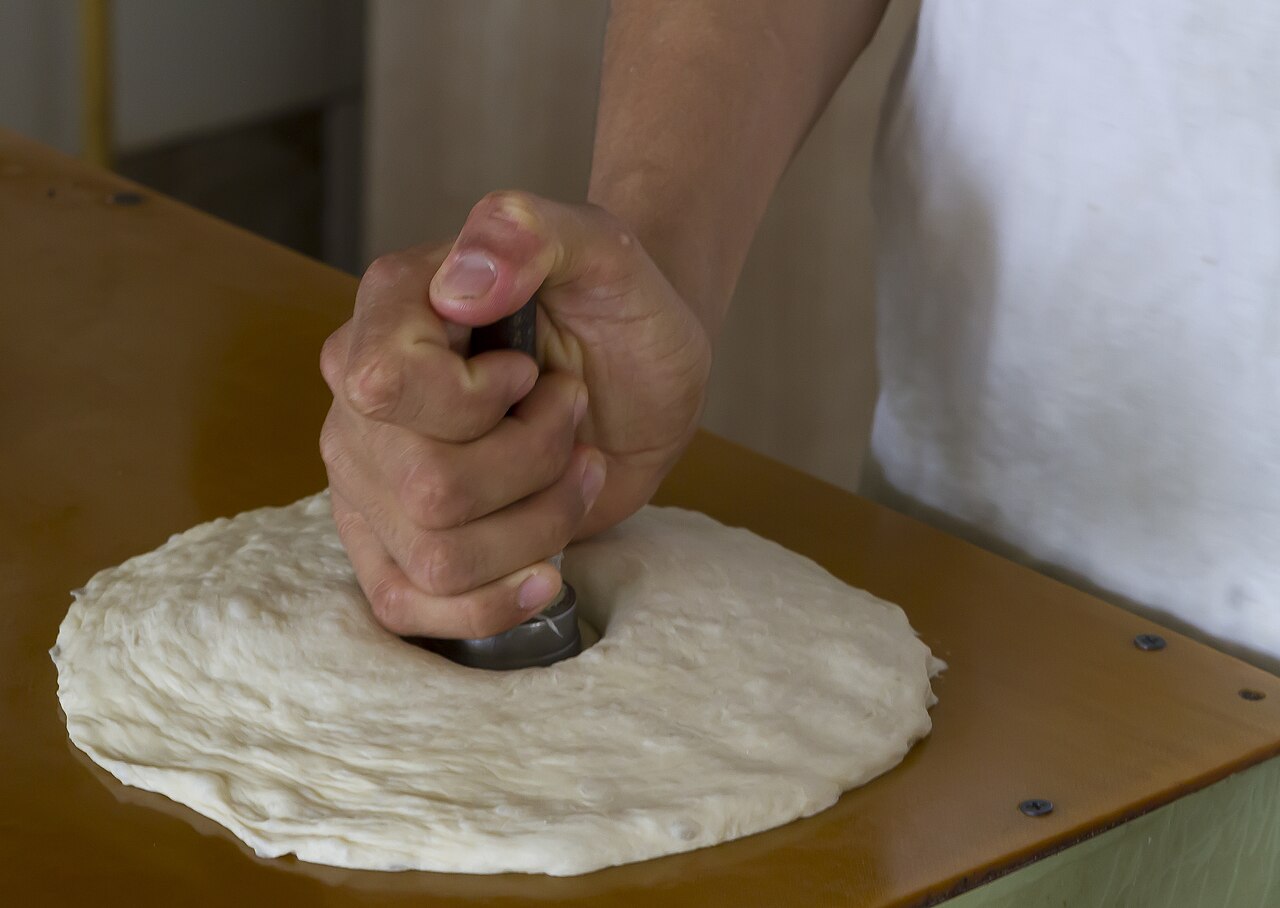
Nothing reveals Uzbek values faster than the treatment of bread. The round flatbread called non (or lepyoshka in Russian) is regarded as sacred, a symbol of life and a gift not to be wasted. There are firm customs around it, and locals notice when a visitor gets them right.
- Never place bread upside down on the table; it is considered disrespectful and bad luck. If you find a loaf face-down, quietly turn it over.
- Tear bread by hand and share it rather than cutting it with a knife.
- Do not put bread on the floor or throw it away in front of others. If a piece drops, pick it up and place it somewhere high and clean.
- At a shared meal, let the host or the youngest person break and distribute the bread first.
More broadly at the table, wait to be shown where to sit; the seat facing the door is often reserved for the most honored guest or elder. Try a little of everything, and pace yourself, because the main dish usually arrives late and in generous quantity.
Bazaars and Bargaining
Uzbekistan’s bazaars, from Tashkent’s Chorsu to the craft stalls of Bukhara, are half marketplace and half theater. Bargaining is expected for souvenirs, textiles, and crafts, but it is a friendly exchange rather than a battle. Greet the seller, show genuine interest, and ask the price with a smile. Countering at roughly 60 to 70 percent of the opening figure and settling somewhere in the middle is normal. Keep it good-humored; walking away often produces a better final price, and a seller who feels respected will usually meet you partway.
Note that fixed-price groceries, food stalls, transport fares, and supermarket goods are not up for negotiation. Haggling only applies where prices are visibly flexible. If you are unsure whether a place feels safe or fair for solo browsing, our take on whether Uzbekistan is safe covers the practicalities.
Photography Etiquette
Uzbekistan is wonderfully photogenic, and most people are relaxed about cameras. Still, ask before photographing individuals, especially older women and anyone in traditional dress, and always respect a refusal. A quick Mumkinmi? (“May I?”) with a gesture toward your camera works well. Vendors sometimes expect a small purchase in return for a portrait, which is a fair trade.
Avoid photographing inside mosques during prayer, and be cautious around military sites, checkpoints, border areas, and some metro stations, where photography may be restricted. When in doubt, put the camera away. For where those photogenic sites are, see our roundup of the best things to do in Uzbekistan.
Tipping Norms
Tipping is appreciated but modest, and it is not the rigid obligation it can be elsewhere. In mid-range and tourist restaurants, a service charge of around 10 percent is sometimes added to the bill; check before adding more. Where there is no service charge, rounding up or leaving about 10 percent is generous and welcome. For guides and drivers on a private tour, a few dollars per person per day is a reasonable gesture for good service. Taxi fares are usually negotiated up front, so tipping on top is not expected. Small tips are best given discreetly and, of course, with the right hand.
Ramadan Considerations
Uzbekistan observes Ramadan, though less strictly in public than some Muslim-majority countries. Most restaurants stay open during daylight hours and life continues largely as normal in the cities. That said, many locals are fasting from dawn to sunset, so it is thoughtful to avoid eating, drinking, or smoking conspicuously in front of people who are observing, particularly in more traditional towns. Evenings come alive as families break the fast, and being invited to an iftar meal is a real privilege worth accepting graciously.
Useful Words and Phrases
A few words in Uzbek or Russian go a long way. The table below covers the essentials; pronunciation is approximate.
| English | Uzbek | Russian |
|---|---|---|
| Hello (formal) | Assalomu alaykum | Zdravstvuyte |
| Hello (informal) | Salom | Privet |
| Thank you | Rahmat | Spasibo |
| Please | Iltimos | Pozhaluysta |
| Yes / No | Ha / Yo’q | Da / Nyet |
| Excuse me | Kechirasiz | Izvinite |
| How much? | Qancha? | Skolko? |
| Too expensive | Qimmat | Dorogo |
| Cheaper, please | Arzonroq | Deshevle |
| Delicious | Mazali | Vkusno |
| Goodbye | Xayr | Do svidaniya |
Dos and Don’ts
- Do accept tea and at least a taste of the food you are offered; it honors the host.
- Do use your right hand for eating, greeting, and giving or receiving anything.
- Do remove your shoes when entering homes and mosques, and carry a scarf if you are a woman visiting religious sites.
- Do learn a few words; even a single rahmat changes the mood of an exchange.
- Don’t place bread upside down, put it on the floor, or cut it with a knife.
- Don’t photograph people, especially women and elders, without asking first.
- Don’t eat, drink, or smoke conspicuously in front of people fasting during Ramadan.
- Don’t point the soles of your feet at people or step over someone’s food or belongings.
Frequently Asked Questions
Do I need to cover my head in Uzbekistan?
Not in daily life. Women dress freely in the cities and no head covering is required on the street. The exception is active mosques and shrines, where women should cover their hair with a scarf. Carrying a light scarf in your day bag means you are always ready, and one is often provided at the entrance of major sites.
Is bargaining expected everywhere?
No. Bargaining is normal for souvenirs, crafts, and textiles in bazaars, but not for supermarkets, food stalls, restaurants, or fixed-price shops. Keep it friendly, aim for a fair middle ground, and remember that a warm exchange matters more than squeezing out the last few percent.
Should I tip in restaurants?
Tipping is welcome but modest. Check whether a service charge of around 10 percent is already on the bill; if not, rounding up or leaving roughly 10 percent for good service is generous. Guides and drivers appreciate a few dollars a day, while negotiated taxi fares do not need an extra tip.
Why is my tea cup only half full?
It is a sign of respect, not neglect. A small pour means the host will refill you frequently, and each refill is a chance to show attention and keep you at the table longer. Filling a guest’s cup to the brim would suggest you should drink up and leave.
Is it rude to refuse food?
Refusing outright can come across as cold, since hospitality is central to Uzbek culture. You do not have to finish everything, but accepting at least a small portion shows appreciation. A hand over the heart with a smile politely signals that you have had enough.
Can I take photos of the mosques and monuments?
Yes, exteriors and most interiors are fine, and Uzbekistan’s architecture is a highlight. Avoid photographing worshippers during prayer, ask permission before close portraits of people, and steer clear of military sites and checkpoints. When a sign or a person indicates no photography, respect it.
Traveling with Respect
Uzbek etiquette rewards warmth over perfection. No one expects a visitor to master every custom, and locals are quick to forgive an honest mistake made with a smile. Accept the tea, honor the bread, greet with your right hand, and ask before you photograph, and you will find the country opens up to you with remarkable generosity. For a deeper feel of the historic cities where these customs come alive, continue with our Samarkand travel guide.
Featured image: Benjamin Goetzinger (CC BY-SA 4.0) via Wikimedia Commons.