If plov is the centrepiece of an Uzbek feast, samsa (often spelled somsa locally) is the everyday hero: a hand-sized parcel of pastry, baked until the top blisters golden and the underside soaks up the fat of whatever hides inside. You smell it before you see it, drifting out of bazaar corners and roadside kiosks where a clay oven glows with coals. Bite in while it’s still too hot to hold politely, and the layers shatter, the juices run, and you understand immediately why locals queue for the good ones.
Samsa is one of the most rewarding things to eat here precisely because it’s so accessible: cheaper than a coffee back home, sold nearly everywhere, and varied enough that you could spend a whole trip comparing versions. This guide covers what samsa is, how tandyr-baked differs from the flaky oven-baked kind, the fillings and shapes worth seeking out, what you should pay, where to find the best, and how to order and eat it.
What Samsa Is
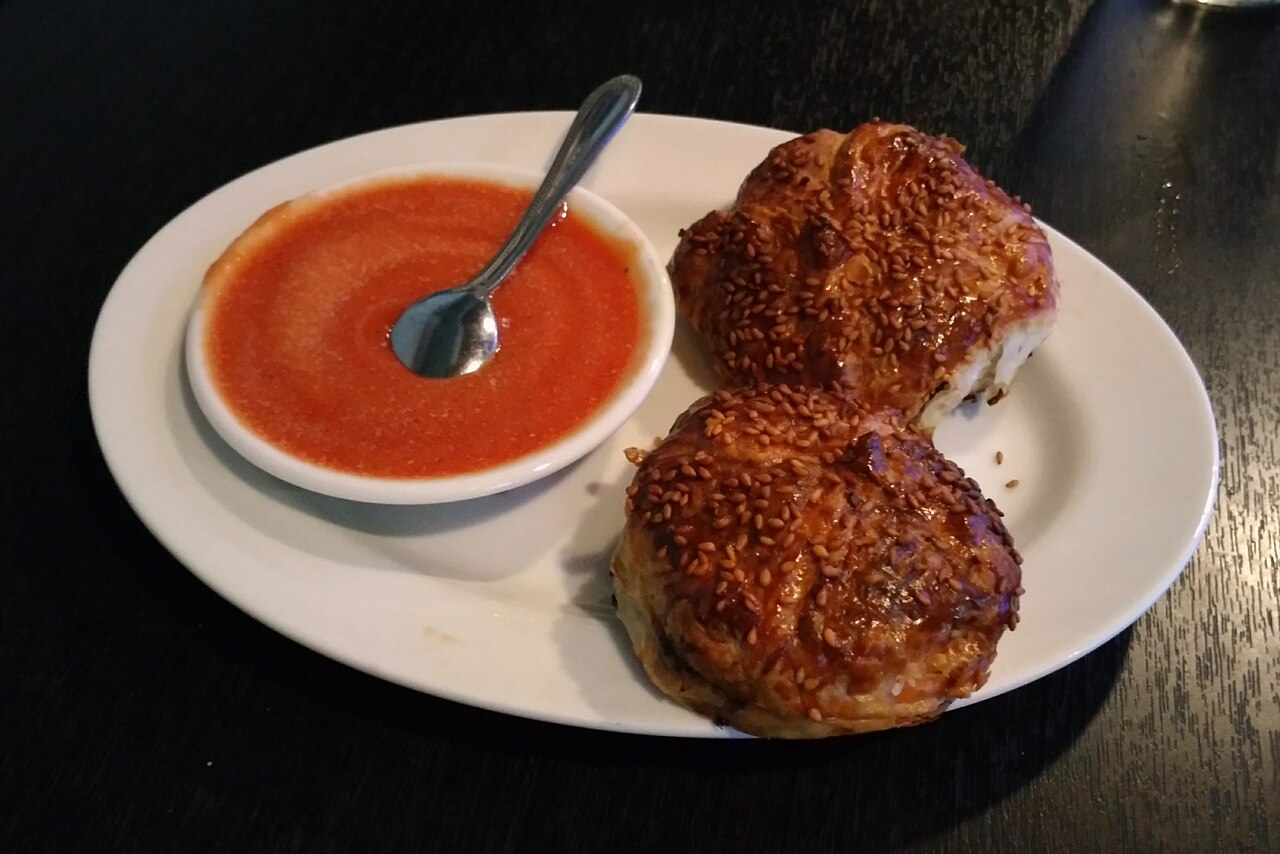
Samsa is a savoury baked pastry filled most classically with minced or hand-chopped lamb and onion, then baked — not fried — until crisp. The name shares a root with the Indian samosa and the Middle Eastern sambusa; all three trace back to the Persian sanbosag, and the family resemblance is no accident. But the Uzbek version went its own way centuries ago, and the defining difference is the oven. Where an Indian samosa is deep-fried into a soft-shelled triangle, Uzbek samsa is baked, which gives it a drier, flakier, grease-free crust and a savoury, buttery interior. You can read more about the shared history on the Wikipedia entry for samsa.
Within Uzbek cuisine, samsa sits between a snack and a light meal: a breakfast eaten standing up, a mid-morning bite with tea, a picnic staple for a long drive. It belongs to the grab-and-go world we cover in our guide to Uzbek street food, and alongside non (Uzbek bread) it’s one of the two things you see coming out of a tandyr most. For how it fits into a day of eating, our complete Uzbek food guide puts it in context with plov, shashlik and the rest.
Tandyr-Baked vs Oven-Baked Puff Samsa
The single most important distinction to understand is how the samsa is baked, because it changes the dough, the texture and the flavour completely.
Tandyr samsa
The traditional and, for many people, the best version is baked in a tandyr — a barrel-shaped clay oven fired with coals, the same oven used for bread across Central Asia. The baker slaps the raw samsa directly onto the searingly hot inner wall, where it sticks, bakes and takes on a faint smokiness you can’t fake in a conventional oven. Tandyr samsa usually uses a plainer, bread-like dough. The result is sturdy, chewy-crisp and built to hold a generous, juicy filling. If you see a tandyr with a queue, that is where you want to be.
Puff (oven-baked) samsa
The other major style is varaki or puff samsa, made with a laminated, many-layered dough closer to puff pastry: rolled thin, spread with fat, folded and re-rolled so it bakes into dozens of crackling flakes. These are increasingly baked in modern gas or electric ovens, which is why you find them in cafés and bakeries too. They are lighter, richer and messier. Neither style is “correct” — locals happily eat both, so try one of each and pick a side.
Fillings, Shapes and Regional Varieties
Filling and shape are linked in a way that is genuinely useful to know: in many bazaars the shape tells you what is inside, so vendors can sell several kinds side by side without labels. A triangular samsa often signals one filling, a square or half-moon another. Ask if you’re unsure — pointing and raising an eyebrow works fine.
The undisputed classic is gosht (meat) samsa, usually lamb or a lamb-beef mix, hand-chopped rather than machine-ground, packed with onion and seasoned with cumin and black pepper. Come autumn and winter, the star shifts to oshkovoq (pumpkin) samsa — sweet, soft squash bound with onion, one of the great seasonal treats of the region. You’ll also find potato, greens (a spring favourite), and, in some places, cheese. A few specialities are worth chasing: Alat samsa from the Bukhara region uses an unusually thin, almost fried-bread-like dough, and premium versions turn up made with kazi (horse-meat sausage). Regional preferences shift as you travel, which is half the fun.
| Type (local name) | Filling & description | Typical price (last checked: July 2026) |
|---|---|---|
| Gosht / go’sht somsa | Classic lamb or lamb-beef with onion, cumin, pepper; hand-chopped, juicy | 8,000–12,000 som (~$0.65–$1.00) |
| Oshkovoq somsa | Pumpkin, sweet and soft; autumn and winter seasonal favourite | 7,000–11,000 som (~$0.55–$0.90) |
| Kartoshka somsa | Potato and onion; budget-friendly and vegetarian | 6,000–10,000 som (~$0.50–$0.80) |
| Ko’kat somsa | Greens/herbs (spring); lighter, fragrant | 7,000–11,000 som (~$0.55–$0.90) |
| Varaki (puff) somsa | Flaky laminated pastry, usually meat; café and bakery style | 10,000–15,000 som (~$0.80–$1.20) |
| Kazi / premium somsa | Horse-meat sausage or special fillings; found in better restaurants | 15,000–25,000 som (~$1.20–$2.00) |
Prices are approximate and vary by city, venue and size (last checked: July 2026). Bazaar and roadside samsa sit at the low end; sit-down restaurants and airport or old-town tourist spots charge more. As a rule of thumb, if a single samsa costs more than about 25,000 som you’re paying a location premium.
How to Order and Eat It
Ordering is refreshingly simple. Hold up fingers for how many you want and, if there’s a choice, name or point to the filling: gosht for meat, oshkovoq for pumpkin, kartoshka for potato. Samsa is nearly always sold by the piece. Freshness matters enormously, so favour the stall with turnover and a hot oven over one with a cold tray of leftovers; a batch straight from the tandyr is worth a short wait.
Eat it with your hands, and be warned that a fresh one is a small hydraulic hazard — the filling holds a reservoir of hot juice. The local move is to nibble a corner first, let the steam escape, then tip it slightly so nothing runs down your wrist. Samsa is very often eaten with tea; a pot of green tea cuts the richness, and a cold-morning pumpkin samsa with a bowl of salted shirchoy is a beloved breakfast. On the table you’ll often find sliced raw onion, vinegar or a vinegar-onion mix, and sometimes chilli sauce — a splash of vinegar over a meat samsa cuts the fat nicely. Our guide to tea and the chaikhana explains the ritual that so often accompanies it.
Where to Find the Best Samsa
Samsa is everywhere, but the best comes from three kinds of place: bazaars, dedicated somsa-xona (samsa houses), and roadside tandyrs. The general rule holds across all of them — follow the longest local queue.
- Bazaars. In the capital, the tandyr stalls at Chorsu Bazaar are a reliable and atmospheric first stop, with meat samsa running roughly 8,000–12,000 som (last checked: July 2026). Every major market has its samsa corner.
- Somsa-xona and restaurants. Tashkent’s well-known Minor Somsa is a local favourite dedicated to the craft. In Samarkand, locals point visitors to Kokandskaya Somsa. These sit-down spots are good if you want variety and a place to rest.
- Roadside tandyrs. Some of the finest samsa in the country comes from unglamorous stands beside the road or near a bazaar’s edge — in Bukhara, the tandyr stalls around the Central Bazaar have a serious reputation for flaky, fresh-baked samsa. These are worth a stop on any long drive.
Wherever you’re based, samsa slots easily into a day of sightseeing — pair it with our city guides for Samarkand and Bukhara to plan where to eat between the monuments.
Etiquette and a Few Honest Notes
Samsa is casual food with little formality, but a couple of things help. If you’re offered samsa and tea in someone’s home or shop, accepting graciously matters more than any rule about how you eat it; hospitality runs deep here. Keep your left hand off the food where you can, and let your host keep your tea cup topped up rather than helping yourself first.
Two practical warnings. First, the heat is real — that first-bite steam burn catches almost everyone, so give a fresh samsa a moment. Second, meat samsa from a busy, high-turnover vendor is generally very safe, but a lukewarm one that has sat out is worth skipping. For balance on a food-heavy trip, alternate your samsa runs with a proper sit-down bowl of plov.
How It Differs From Samsa Elsewhere
Travellers often arrive expecting an Indian samosa and get something quite different. Uzbek samsa is baked, not fried, so it’s drier, flakier and far less greasy, and its seasoning leans on cumin and black pepper rather than the turmeric-and-garam-masala profile of South Asia. Compared with the Middle Eastern sambusa, the Uzbek version is heartier and more bread-forward. Even within Central Asia there’s variation: the Uyghur samsa of Xinjiang and the triangular sambusa-i varaki of Tajik cuisine are close cousins with their own quirks. Outlets like Lonely Planet’s Uzbekistan food guide single out samsa as an essential taste of the region, and once you have had a good one straight from a tandyr, it’s easy to see why.
Frequently Asked Questions
How much does samsa cost in Uzbekistan?
A single meat samsa typically costs about 8,000–12,000 som (roughly $0.65–$1.00) at a bazaar or roadside tandyr, with vegetable versions a touch cheaper and puff or premium ones a bit more (last checked: July 2026). Sit-down restaurants and tourist-heavy old-town spots charge more. As a rough benchmark, paying much above 25,000 som for one plain samsa usually means you’re paying for the location.
Is samsa the same as a samosa?
They are relatives, not twins. Both descend from the Persian sanbosag, but Uzbek samsa is baked — often in a clay tandyr — while the Indian samosa is deep-fried. That makes samsa drier, flakier and less oily, with a cumin-and-pepper seasoning rather than the spice blends common in South Asia.
What is the difference between tandyr and puff samsa?
Tandyr samsa is baked stuck to the wall of a hot clay oven and uses a sturdier, bread-like dough, giving it a chewy-crisp shell and a faint smokiness. Puff (varaki) samsa uses a laminated, many-layered pastry closer to puff pastry and is often baked in a conventional oven, so it’s lighter, richer and flakier. Both are traditional and widely eaten; try one of each.
Is there vegetarian samsa?
Yes. Pumpkin (oshkovoq) samsa is a beloved autumn and winter option, and potato and greens versions are common too. Do check, though, because some vegetable fillings are enriched with animal fat, and cross-baking in the same oven as meat samsa is normal. If it matters to you, ask the vendor directly.
When is samsa eaten during the day?
Any time, but it’s especially popular as a quick breakfast or mid-morning snack with tea, and as a light lunch alongside a salad. Pumpkin samsa with a bowl of salted milk tea (shirchoy) is a classic cold-weather breakfast. It also travels well, so it’s a favourite for road trips and picnics.
How do I know which filling I am buying?
In many bazaars the shape is a code — a triangle for one filling, a square or half-moon for another — so vendors can sell several kinds unlabelled. Rather than guess, just ask or point: say gosht for meat, oshkovoq for pumpkin, or kartoshka for potato. Vendors are used to visitors and happy to steer you.
Samsa rewards the curious eater. Order the meat one first to understand the classic, then work outward — a smoky tandyr version one morning, a flaky puff one the next, pumpkin when the weather turns. It’s cheap, it’s everywhere, and at its best, fresh from the oven with the pastry still crackling, it’s one of the simplest pleasures of travelling in Uzbekistan. Follow the queue, mind the steam, and keep a napkin handy.
Featured image: 赤猫法師 (CC BY-SA 4.0) via Wikimedia Commons.